Friday, 31 October 2008

You Feelin' Lucky, Ecopunk?


In the very early days of CSNI, I interviewed Tony Bailie and reviewed his first novel, The Last Chord. It was Dec Burke that originally got me thinking about starting up a blog dedicated to crime fiction, with a leaning towards work by Northern Irish authors, but it was reading books by writers like Tony Bailie that swung it. Tony's book was published by Lagan Press, and although it's a house with a long history in producing great Northern Irish literature, it just doesn't have a whole lot of money. So, great books are published but don't get the recognition they deserve because there isn't enough cash to promote them. Obviously, a review on CSNI won't shoot any book into the New York Times best seller's, but it's an extra wee bit of publicity.

And after only a little bit of cajoling, Mr Bailie has gone ahead and started his own blog. Visit ecopunks and read an excerpt from The Lost Chord and some great articles on Rory Gallagher, The Undertones and more. And sure, why not buy his book while your at it. Just to prove me right, like.

Thursday, 30 October 2008

Just Wondering


This piece isn’t too dissimilar to the series of posts on genre from Declan Burke’s Crime Always Pays; the main difference being that this post is more self-serving. You see, in the five years from my first short story sale, to my recent near-successes in getting a novel published, I’ve labelled myself as a horror writer, a dark fiction writer, a black humour writer and a crime fiction writer. A blind baboon can see the one common denominator in these labels. Writer. And how much further does this go? Screenwriter, stage-play writer, review and article writer... I either seriously need intravenous Ritalin, or a more focussed approach to my writing.

Or do I?

Write what you know. Write what excites you. Write from the heart. Just keep on trying. Be patient. Don’t write with money in mind. Don’t write to a trend. Do. Don’t. Can’t. Won’t. Stick to your guns. Don’t be precious. Respect other people’s opinions. Watch out for bad advice. Find a niche. Don’t emulate. Read widely, though maybe not when you’re writing. Redraft. Edit while you go. Ignore the internal editor. Don’t let plot drive the characters. WRITE! Where the feck is this story going? Does this work? How can you not get this? Read this, please. But not in front of me. What did you think? No, don’t tell me. What do you mean you don’t get it? It’s obvious! Hey, don’t publishers like books with serial potential? Ooooh, don’t put all your eggs in one basket. Everybody’s got a book in them. My arse! Get an agent. No, wait until you’ve published one novel. Who needs an agent? What do they do? How long should this chapter be? Where did I put that piece of string? Do I have enough money for a six-pack of Stella?

How’s that for focus?

It’s a start, right?

Have I started?

My clearest ambition in all the self-inflicted crud that tumbles about in my head before I fall asleep is to see my novel, Piranhas. published. It’s a good book. I know this. And that’s why I haven’t read it since I did my final edit quite some time ago. I believe in it right now. But what if I’m wrong? What if it really is too Belfasty. What can I do about the parts that refer to the ever-evolving political system, that impacts on my main players, if I’m still submitting this novel for another five years? What if it’s not very good? Simple. I have to write on.

But what? My current work-in-progress, I’m enjoying, but constantly second-guessing. My protagonist is strong. She has serious potential as a recurring character, and actually already appears in my screenplay and unpublished novella, The Point. But today I don’t think there’s enough of a hook in the early chapters I’ve written. That’s okay. It’s not something someone else has told me. I’m going on instinct. Or am I? Is there a calculating, part-qualified accountant in me, number-crunching and ticking boxes? Have I started writing to a trend or with a market in mind? I need time for perspective, or I need to blast through. Something for me to decide later.

So, what now? Blank screen. Chapter One. Let’s see what happens to this guy... Novel, novella, short story? Horror, comedy, crime?

Ah, genre. It’s been too long.

Here’s something, though. Short fiction. Go to ralan.com and feast your eyes on all the markets for short fiction in horror, science fiction and fantasy. Where’s the crime section? Because the last few stories I’ve submitted have been a little genre-straddling, with most weight on the crime foot. But I’m sending these stories to horror markets and the odd time I get feedback with my rejection. In one case, an editor wondered why the victim in the story didn’t come back as a zombie.

I can send one short story a month to Thuglit; a webzine that publishes crime fiction. Ask Stuart Neville about them. I haven’t found any other venues. Point me in the right direction if you can.

Or maybe I deal with genre thusly: I write short horror stories, crime novels, literary stage plays...

How come screenplay writers don’t seem to be as confined to genre?

Treat this as an article/half-hearted rant, smile and click onto the next blog, or scratch your head along with me. Even better, tell me the secret of success, or if I’ve almost met my requisite quota of ‘life experience’. Hell, if you’re a doctor, a Ritalin prescription wouldn’t go amiss. In the meantime, I’ll be thinking.


Wednesday, 29 October 2008

Nev Thompson's - Sex, Lies and Butterflies


Neville Thompson is a Dublin writer who’s been doing the crime thing for a long time. I’ve mentioned him here before, though I’ve only read his first three novels, so I’ve got some catching up to do. Although his work features gangsters, drugs and loan sharking, he prefers not to label it. To him, his novels are life fiction in a time when a lot of crime happens. Whatever the genre (and personally I still consider it crime fiction), it’s good. Very good.

But he doesn’t just write. He runs all manner of workshops, and most recently, he had a big hand in the literary festival in Castlecomer, Kilkenny. And by the looks of it, after a short year’s hiatus, he’s begun blogging again.

So check out this post, where he mentions Garbhan Downey’s innate professionalism among other shout-outs to the talent involved in the festival. Oh, and some ne’er-do-well by the name of Declan Burke gets a mention too.

But that's not the best bit. He's writing an internet novel! So you don't even need to part with your hard earned pennies to sample his work. Just go to his blog, where he plans to upload a chapter a week!

Sweet.


Monday, 27 October 2008

An Interview - Andrew Pepper


Andrew Pepper is the author of a series of crime novels set in mid nineteenth-century London featuring Pyke including The Last Days of Newgate (2006), The Revenge of Captain Paine (2007) and Kill-Devil and Water (2008). He lectures in English and American writing at Queen’s University Belfast.


“It is a problem with literary imitations that they can never be as untypical or as groundbreaking as their originals… But Andrew Pepper’s Kill-Devil and Water is unusually successful as Dickensian narrative…. Pepper’s novel, like the best crime writing in a contemporary setting, is tough on the institutional causes of crime: slavery, pornography, prostitution. Set partly in nineteenth century Jamaica, partly in London, its intricate plot hinges on mistaken or mislaid identities, something which almost all faux-Victorian crime novels, set in an era before DNA testing and computerized data, exploit, and the relationship between identity, family and race is especially well done. In its urgency and rawness – and the disturbing moral ambiguity it shares with the original Newgate novels – Kill-Devil and Water goes further than simply clever and diverting appropriation.” TLS (13.08.08)

Q1. What are you writing at the minute?

A new Pyke novel that I’m provisionally calling London Descending (though this has yet to meet with publisher approval!). Pyke has joined the Metropolitan Police’s newly formed Detective Branch as Inspector and his new role, and a violent robbery-gone-badly-wrong, eventually bring him into confrontation with figures in the police force and the shadowy links between church and state.

Q2. Can you give us an idea of Andrew Pepper’s typical up-to-the-armpits-in-ideas-and-time writing day?

When I get a whole day to write, which is a rarity, I like to be at my desk, and PC, by nine in the morning and write until I can’t see straight anymore; could be mid-afternoon, could be sometime into the night. I have two or three note books on the go, where I scribble down ideas, passages, plot structure, character notes etc., together with files of notes on particular subjects I’ve had to research (i.e. for the current novel, the Metropolitan police, the Irish in London, the Anglican and Catholic churches in London, witchcraft, Satanic practices etc.) and piles upon piles of books that I might need to consult. I tidy up when things start to smell.

Q3. What do you do when you’re not writing?

My real job is lecturing in English at Queen’s so I have to fit in my writing as and when time becomes available. I suspect it’s like that for a lot of writers, at least the ones who aren’t up there nudging the Pattersons and Connellys off the shelf space. When I’m neither at work nor writing you might find me in the pub.

Q4. Any advice for a greenhorn trying to break into the crime fiction scene?

Publishers are odd, fickle creatures: they seem to want new crime novels and authors to be both wholly original and just like so-and-so. Since this is technically impossible, it’s to try and forget what publishers want and try and write something that excites you, because if it doesn’t excite you it won’t excite anything else. I’ve tried to learn to listen to my instincts: when the writing is going well, you can just feel it – it can be very exhilarating. But when it isn’t, you have to stop and try and figure out what has gone wrong. Oh, and get an agent. Obviously. Which is almost as hard as finding a publisher.

Q5. Which crime writers have impressed you this year?

Denise Mina & Brian McGilloway. I’ve just finished Derek Raymond’s I was Dora Suarez which was re-issued this year by Serpent’s Tail and is insanely brilliant. The trio of U.S. crime writers who contributed to The Wire – Pelecanos, Lehane and Price – deserve a mention but generally I think the assumption that American crime writing is necessarily better, more innovative, more daring etc. than British and/or Irish and/or European crime writing needs to be consigned to the waste bin.

Q6. What are you reading right now?

The Terrorists by Maj Sjowall & Per Wahloo.

Q7. Plans for the future?

I’m going to write two more Pyke novel; one, provisionally called London Descending (described above) set in 1844 and the other, set two years later in 1846 in which Pyke returns to Ireland. From the year, you can perhaps guess the context. As an English writer with an English character, I step into that particular arena with extreme caution.

Q8. With regards to your writing career to date, would you do anything differently?

I’d like to have more time to write the novels. I know I’m incredibly lucky to be published at all but the notion that a-book-every-year is sustainable for a writer in the long term seems an absurdity to me, as the quality will inevitably diminish over time. I’d also like to devote more time and energy into marketing and publicising my novels but unfortunately writing them, and doing my job, takes up every working hour.

Q9. Do you fancy sharing your worst writing experience?

No writing experience is intrinsically ‘bad’ but carrying on with a bad idea and trying to write through the pain can feel like pushing a fat man in a shopping trolley through a bog. I’ve written some dire novels (unpublished of course) in the past but as terrible as they are, nowadays with the passing of the years I can even look at them with some modicum of affection.

Q10. Anything you want to say that I haven’t asked you about?

That just about covers it.


Thank you, Andrew Pepper!

Friday, 24 October 2008

John Connolly on Stuart Neville


I've been looking forward to reading The Ghosts of Belfast by Stuart Neville for a long time now, but the latest post on Stuart's blog has me positively fidgeting in my seat. Or maybe that's down to the Diet Coke I had for breakfast. Either way, I'm impressed, awed and unprofessionally jealous of this quote from the godlike John Connolly:
"Ghosts of Belfast is not only one of the finest thriller debuts of the last ten years, but is also one of the best Irish novels, in any genre, of recent times. It grips from the first page to the last, and heralds the arrival of a major new voice in Irish writing. I don't know how Stuart Neville is going to improve upon such an exceptional first novel, but I can't wait to find out..."

Stuart says he's flabbergasted, but I'm assuming he means that in a good way.

Thursday, 23 October 2008

On Point


Apart from a snippet or two, there's been very little going on here at CSNI this week. And after all the momentum I'd built up in the last few weeks, it seems a shame that I've let things slow down so much. But I haven't just been slacking off, I swear. This week, I threw myself into the second draft of my screenplay, The Point. And I'm done with it! So, after a day or two of chilling, normal service should resume soon.

My next writing project will be to sign up for NaNoWriMo in the hopes that it'll kickstart the novel I began earlier this year. It's been sitting at 12K words for months now, and I really need to get it moving. I'm not really a 50K in one month kind of writer, as I tend to edit as I write, but I need to shake things up. Plus, Ian Sansom is running NaNoWriMo workshops at Queen's University in the month of November and Stuart Neville is doing a talk at one of the sessions, so it'll be CSNI relevant too!

But that's for next month. For now, I'm having a wee drink.

So, sláinte.

Tuesday, 21 October 2008

Start Spreadin' The News...


Adrian McKinty, one of CSNI's most featured writers has his happy face on today. He got himself nominated for an award! He says:


The uber charming Rebecca Gray, Serpent's Tail's PR guru/marketing whiz/resident genius informed me this morning that The Bloomsday Dead has been long listed for an award. It's from Spread The Word an increasingly important body in the UK who want to encourage people to (gasp) read more books. It's a people's choice award, so after the long listing, the people, i.e. you, will vote to make the short list and the winner will be announced on international book day next year. If you'd like to vote for Bloomsday Dead or any of the other nominees then jump on over to their website.

So, what are you waiting for? It'll take you about half a minute to register as a user on the site, then just go here and vote for The Bloomsday Dead. Maybe leave a wee comment of suport too, eh? Go on, he's not a bad aul sort, like.


Monday, 20 October 2008

Two for Crime

You heard it here second, because the knavish Dec Burke of CAP infamy posted about it earlier with a funnier title. But sure, no harm repeating the pertinent info. Click the pic for a closer look.


I'd love to attend this one myself, but again, the pesky dayjob interferes. What can you do?

Friday, 17 October 2008

A Wee Review - American Skin by Ken Bruen


Ken Bruen is the Galway man behind the Jack Taylor series and the Inspector Brant novels. He’s also written a fair clatter of standalones. American Skin is one of those. As well as being a dark and action-packed crime novel, this book takes a look at the longstanding fascination the Irish hold for America. Pop culture references abound, from Homer Simpson to Tony Soprano, and help sculpt the landscape of the setting.

Stephen Blake is on the run after a bank heist gone wrong in his native Ireland. He’s left behind his home, his life and his love, but sees this as a temporary situation. In time, he’ll make a life and home in America, with his lover Siobhan; just as soon as the swag from the heist is freshly laundered and he hooks up with his girl in Tucson. But, grief for his best friend, who died in the heist, acts as a catalyst to Blake’s spiralling loss of control. And the third crewmember from the robbery, psycho ex-IRA man Stapleton, is after more than his fair share of the loot. Add to the situation two American-grown loose cannons in the form of homicidal maniacs Dade and Sherry, and you’ve got a real stunner of a storyline on your hands.

Blake’s quest to don an ‘American Skin’ includes cultivating a new accent, outlook and image. At times it looks like he’s going to achieve his transformation, and on more than one occasion he makes some true-blue American blunders; one of them on a trip to Vegas – now that’s the American way. But at all the wrong moments, his Irish core shines through. His efforts make for a fascinating character journey. And already I’ve touched on the main strength of this book. Characterisation.

In this relatively short novel, we meet a large cast. And right down to the bittiest of bit-players, we find depth of character. The shifting perspective he employs in this book allows us a glimpse inside each main character’s mind. They all have a fully formed past that has contributed to their present states, and in the majority of cases, the present state is not a stable one. As the protagonist, Blake is the best of a bad bunch, but he’s certainly no angel. He has a shady past and a fatal propensity for poor decision making. In Hollywood, characters often forgo a ‘redemptive arc’. Blake’s journey is more of a damning zigzag.

And then there’s Bruen’s prose. He writes in a pared-down and straight-forward manner, and yet, he somehow manages to pack at least one killer line into every page. It’s the kind of writing that should make you want to howl from the rooftops, bark at the moon and speak in tongues. As a writer, I feel I should be blinded by envy, but the avid reader in me won’t allow it. American Skin is so much of a pleasure to read that the jealous writer in me is sedated and the awestruck reader elated.

God damn you and bless you, Ken Bruen.

Wednesday, 15 October 2008

Carnival of the Criminal Minds


Come one, come all! See the freakishly humungous blog post! The Carnival of the Criminal Minds has made its way to Northern Ireland after a stint at Michael Walters's The Shadow Walker blog. Except here it’s not a carnival, it’s a funfair. It’s not cotton candy, it’s candyfloss. And I’m pretty sure that’s boke in the front cab of the ghost train, not puke.

Barbara Fister was kind enough to get in touch and invite me to host the Carnival here, and I readily accepted. I hope she doesn’t regret the decision, as I decided to shake things up and take a look at crime movies rather than crime fiction novels, just for a wee change.

You see, I’m working on a screenplay right now and watching a hell of a lot of movies for inspiration. And I realised that a lot of my viewing choices were movies with some sort of Irish element to them. So, after a quick flick through the pages of IMDB, I chose ten movies from my collection that span the last ten years and could be considered Irish crime. It made for some pretty relaxing research.

Enjoy!

Ten Years of Irish Crime Movies

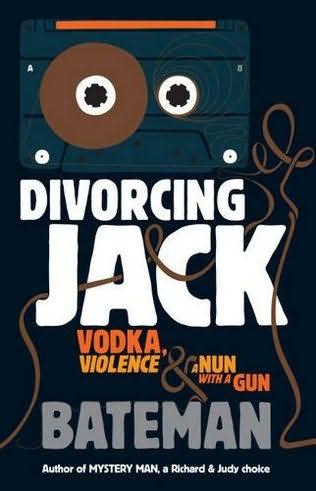
Divorcing Jack (1998)

Based on the novel by Colin Bateman, Divorcing Jack was the first movie to tackle the Troubles from a humorous angle. And this when the peace talks were still on very rocky grounds! Bateman deserves recognition for having the balls to do this at all, but add to it the fact that it’s been done well... you’ve got a modern classic in Divorcing Jack, both in print and on the screen.

And it’s an excellent book-to-movie conversion, which isn’t always the case. Maybe this has something to do with the fact that Mr Bateman himself wrote the script?

David Thewlis puts in a very convincing attempt at being a Northern Irish man. His accent, mannerisms and facial expressions are all bang on. In every Dan Starkey novel since, I’ve imagined Thewlis as the lead man.

Loved this movie.

The Boondock Saints (1999)

Two Irish-American brothers turn vigilante in this veritable bloodbath of a gangster movie. A simple plot with little in the way of twists and turns, but it’s a cult classic and I’m for signing myself into this particular cult. The brothers believe they have been chosen by God to clean up the mean streets, and if their divine luck is anything to go by, there’s a case to be argued. Each mission they go on gets bigger and more dangerous, and that’s just good TV. And they have the good sense to bring a length of rope along with their guns and knives, like any good vigilante should.

I love this movie for its tough-guy dialogue and hair-raising shootouts and its contentious message. And the weirdo FBI agent played by Willem Dafoe is an absolute treat.

Ordinary Decent Criminal (2000)

Ordinary Decent Criminal is the story of Michael Lynch, a notorious Dublin bank robber and general ne’er-do-well, played by Kevin Spacey. It’s a bit of a light-hearted romp that’s funny in places, but overall it was spoiled by the fact that the American actors sounded like American actors trying to put on Oirish accents. And it was a thinly veiled history of real-life Dublin criminal, Martin Cahill. This story was tackled with much more style and a lead actor with a decent Irish accent in The General, starring Brendan Gleeson as Cahill. Both Ordinary Decent Criminal and The General were funny and poignant in places, but the latter was more violent, which is truer to the reality of criminality. Also, The General didn’t end on a schmaltzy Hollywood note. Ordinary Decent Criminal positively wallowed in it.

Oirish is to the Irish as Blaxploitation is to the African American community; stereotypical, mostly insulting, but occasionally entertaining. Ordinary Decent Criminal is worth a look, if only to see Colin Farrell in a very early role, but of no great relevance to Irish crime movies. Watch The General instead.

Snatch (2000)

A Guy Ritchie flick with a tenuous Irish connection. Brad Pitt plays the Irish Traveller/bare knuckle boxer, Mickey. Pitt’s accent is so thick it requires subtitles, and I think it’s quite good. This may not be a popular opinion, as Pitt has gotten a lot of flack for this and other accents, but come on, the guy’s okay. I particularly enjoyed his trailer park accent in Kalifornia. And in Snatch he’s playing a character a little removed from his past pretty-boy roles. Of course, he still looks a lot better than me, even when he’s dressed in Traveller chic and is inked from head to toe in woeful tattoos.

I like the energy in this movie, and the multiple perspectives of the characters. The plot strands are well tied together by the denouement and Vinny Jones comes across as the mean bugger he is.

Road to Perdition (2002)

Set in the 1930s, Road to Perdition is an Irish-American Gangster movie. It’s got all the hallmarks of a classic, number one being a comparison to The Godfather on the cover. At first I was struck by how slowly the film moved. But this may have been a deliberate device. I think it could be a nod to a time when movies didn’t have to be chock-a-block action squeezed into ninety minutes. And I guess I’ve been affected by the quick-fix mentality of our generation, as I was checking my watch for most of the first half.

However, I eventually relaxed into the pace and found myself enjoying a heart-wrenching story. The father-son theme running throughout was subtle and used to terrific effect. Hanks made, surprisingly, a very good strong silent type as the hitman Michael Sullivan. Jude Law was slightly less convincing, but I allowed for the dodgy accent and enjoyed his quirkiness. Paul Newman was Paul Newman. Enough said.

25th Hour (2002)

A Spike Lee joint. Edward Norton heads a strong cast in the story of a drug dealer’s last night of freedom before his seven year prison sentence begins. It’s set in post-9/11 New York and was filmed at a time when emotions were still very raw. The general feeling of outrage screams through the main plot in many places; not least the scene in an apartment with a view of Ground Zero.

There are a few stylistic flourishes that actually work well for the mood of the film, my favourite being a rant about NYC by Norton’s reflection. Yeah, his reflection. Like I told you, stylish.

It’s a very good film with a tonne of killer one-liners, such as, “I'm Irish. I can't get drunk, all right? I know exactly what I'm saying.

Intermission (2003)

This film doesn’t seem to have gone down well with many people, and I just don’t know why. I thought it was a cracker. Great cast, great story, great film. It’s the tale of a gang of feckless eejits who’ve decided to step up for once in their lives and do something big. And profitable. And criminal, obviously. But the involvement of one true scumbag, Colin Farrell’s Lehiff, has drawn the unwanted attention of an egomaniacal psycho-cop.

One warning. Don’t try adding brown sauce to your tea after watching this flick. It’s stinking.

Man About Dog (2004)

Man About Dog wants to be a Guy Ritchie film, which is a decent enough aspiration. It doesn’t quite make it though. The humour is too zany and there’s not enough violence. This isn’t to say that it’s a bad movie. It just isn’t Snatch with more balls, as the cover proclaims it to be. But I liked it, though I tend to be more lenient with movies set in Belfast.

A trio of Belfast scammers lead by Mo Chara (meaning ‘my friend’ in Irish) try to make it in the cutthroat world of greyhound racing. They mix it up with gangsters, travellers and beautiful Russian babes. The movie is good for a few genuine Belfast belly laughs, but don’t expect anything too cerebral from it. Still, a genuine attempt to set a movie in Belfast that doesn’t centre on the Troubles, and I’m all for that.

The Departed (2006)

It’s Scorsese again! And this time the gangsters are Irish! And it’s brilliant! Right, enough with the exclamation marks.

In The Departed, Leonardo DiCaprio and Matt Damon play a couple of moles on each side of the law. DiCaprio is a cop posing as a crook and Damon a crook posing as a cop. And it’s not an easy life for either of them. You can hear the bile eating through their stomach linings. I mean, my God, who’d have a job like that? The stress would kill you.

Jack Nicholson puts in his standard crazy guy performance, and predictably, I ate it up. I think Jack’s the man. And Martin Sheen, Alec Baldwin and Mark Wahlberg each do their bit to raise the cast profile. This is a big, suspenseful movie, and it dishes out enjoyment in spades.

Once (2007)

This one’s sneaking its way onto the list. Once isn’t really a crime story at all. It’s actually more of a modern day musical. You couldn’t get much further from crime, really. But it is Irish to the core, and absolutely brilliant! And there’s a half-hearted robbery scene at the start, so that’ll do.

Glen Hansard puts across a fantastic performance, but as a singer more so than an actor. The story is a straight forward ‘will they, won’t they?’ romance, but what sets it above the usually dull genre is the music. Heartfelt and beautiful songs play a central role and I got a kick out of every wailing note. And it’s an interesting look into modern-day Dublin, seeing life from the lowlier rungs of society through a busker and an immigrant cleaner. But the music... Yeah, I’m going to buy the soundtrack sometime this week.

In Bruges (2008)

So, In Bruges. Brendan Gleeson, Colin Farrell and Ralph Fiennes. Two great Irish actors and one great English one as the bad guy. It was written by Martin McDonagh, who cut his teeth in the Irish Theatre scene. And the movie’s tone is as Irish as an American tourist’s ancestry. Plus, it’s set in... Belgium? Okay.

Right, I can deal with Belgium, even if Colin Farrell’s character can’t.

In Bruges is the story of two hitmen lying low after a botched job, and how they’re not so good at keeping a low profile. This film is one part hilarity and two parts bleak, bleak, bleakness. The cast is perfect and the pace bang on. I laughed and fought back tears (my wife was sitting beside me so I couldn’t bawl freely). And the storyline hit all the right buttons. The film’s super-dark undercurrent really embodies the best of Irish cinema. I couldn’t give it a higher recommendation. So, go. Watch it now!


Next stop for the Carnival? Well, it's none other than BV Lawson's In Reference to Murder.