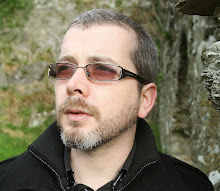
Andrew Pepper is the author of a series of crime novels set in mid nineteenth-century London featuring Pyke including The Last Days of Newgate (2006), The Revenge of Captain Paine (2007) and Kill-Devil and Water (2008). He lectures in English and American writing at Queen’s University Belfast.
Q1. What are you writing at the minute?
A new Pyke novel that I’m provisionally calling London Descending (though this has yet to meet with publisher approval!). Pyke has joined the Metropolitan Police’s newly formed Detective Branch as Inspector and his new role, and a violent robbery-gone-badly-wrong, eventually bring him into confrontation with figures in the police force and the shadowy links between church and state.
Q2. Can you give us an idea of Andrew Pepper’s typical up-to-the-armpits-in-ideas-and-time writing day?
When I get a whole day to write, which is a rarity, I like to be at my desk, and PC, by nine in the morning and write until I can’t see straight anymore; could be mid-afternoon, could be sometime into the night. I have two or three note books on the go, where I scribble down ideas, passages, plot structure, character notes etc., together with files of notes on particular subjects I’ve had to research (i.e. for the current novel, the Metropolitan police, the Irish in London, the Anglican and Catholic churches in London, witchcraft, Satanic practices etc.) and piles upon piles of books that I might need to consult. I tidy up when things start to smell.
Q3. What do you do when you’re not writing?
My real job is lecturing in English at Queen’s so I have to fit in my writing as and when time becomes available. I suspect it’s like that for a lot of writers, at least the ones who aren’t up there nudging the Pattersons and Connellys off the shelf space. When I’m neither at work nor writing you might find me in the pub.
Q4. Any advice for a greenhorn trying to break into the crime fiction scene?
Publishers are odd, fickle creatures: they seem to want new crime novels and authors to be both wholly original and just like so-and-so. Since this is technically impossible, it’s to try and forget what publishers want and try and write something that excites you, because if it doesn’t excite you it won’t excite anything else. I’ve tried to learn to listen to my instincts: when the writing is going well, you can just feel it – it can be very exhilarating. But when it isn’t, you have to stop and try and figure out what has gone wrong. Oh, and get an agent. Obviously. Which is almost as hard as finding a publisher.
Q5. Which crime writers have impressed you this year?
Denise Mina & Brian McGilloway. I’ve just finished Derek Raymond’s I was Dora Suarez which was re-issued this year by Serpent’s Tail and is insanely brilliant. The trio of U.S. crime writers who contributed to The Wire – Pelecanos, Lehane and Price – deserve a mention but generally I think the assumption that American crime writing is necessarily better, more innovative, more daring etc. than British and/or Irish and/or European crime writing needs to be consigned to the waste bin.
Q6. What are you reading right now?
The Terrorists by Maj Sjowall & Per Wahloo.
Q7. Plans for the future?
I’m going to write two more Pyke novel; one, provisionally called London Descending (described above) set in 1844 and the other, set two years later in 1846 in which Pyke returns to Ireland. From the year, you can perhaps guess the context. As an English writer with an English character, I step into that particular arena with extreme caution.
Q8. With regards to your writing career to date, would you do anything differently?
I’d like to have more time to write the novels. I know I’m incredibly lucky to be published at all but the notion that a-book-every-year is sustainable for a writer in the long term seems an absurdity to me, as the quality will inevitably diminish over time. I’d also like to devote more time and energy into marketing and publicising my novels but unfortunately writing them, and doing my job, takes up every working hour.
Q9. Do you fancy sharing your worst writing experience?
No writing experience is intrinsically ‘bad’ but carrying on with a bad idea and trying to write through the pain can feel like pushing a fat man in a shopping trolley through a bog. I’ve written some dire novels (unpublished of course) in the past but as terrible as they are, nowadays with the passing of the years I can even look at them with some modicum of affection.
Q10. Anything you want to say that I haven’t asked you about?
That just about covers it.
“It is a problem with literary imitations that they can never be as untypical or as groundbreaking as their originals… But Andrew Pepper’s Kill-Devil and Water is unusually successful as Dickensian narrative…. Pepper’s novel, like the best crime writing in a contemporary setting, is tough on the institutional causes of crime: slavery, pornography, prostitution. Set partly in nineteenth century Jamaica, partly in London, its intricate plot hinges on mistaken or mislaid identities, something which almost all faux-Victorian crime novels, set in an era before DNA testing and computerized data, exploit, and the relationship between identity, family and race is especially well done. In its urgency and rawness – and the disturbing moral ambiguity it shares with the original Newgate novels – Kill-Devil and Water goes further than simply clever and diverting appropriation.” TLS (13.08.08)
Q1. What are you writing at the minute?
A new Pyke novel that I’m provisionally calling London Descending (though this has yet to meet with publisher approval!). Pyke has joined the Metropolitan Police’s newly formed Detective Branch as Inspector and his new role, and a violent robbery-gone-badly-wrong, eventually bring him into confrontation with figures in the police force and the shadowy links between church and state.
Q2. Can you give us an idea of Andrew Pepper’s typical up-to-the-armpits-in-ideas-and-time writing day?
When I get a whole day to write, which is a rarity, I like to be at my desk, and PC, by nine in the morning and write until I can’t see straight anymore; could be mid-afternoon, could be sometime into the night. I have two or three note books on the go, where I scribble down ideas, passages, plot structure, character notes etc., together with files of notes on particular subjects I’ve had to research (i.e. for the current novel, the Metropolitan police, the Irish in London, the Anglican and Catholic churches in London, witchcraft, Satanic practices etc.) and piles upon piles of books that I might need to consult. I tidy up when things start to smell.
Q3. What do you do when you’re not writing?
My real job is lecturing in English at Queen’s so I have to fit in my writing as and when time becomes available. I suspect it’s like that for a lot of writers, at least the ones who aren’t up there nudging the Pattersons and Connellys off the shelf space. When I’m neither at work nor writing you might find me in the pub.
Q4. Any advice for a greenhorn trying to break into the crime fiction scene?
Publishers are odd, fickle creatures: they seem to want new crime novels and authors to be both wholly original and just like so-and-so. Since this is technically impossible, it’s to try and forget what publishers want and try and write something that excites you, because if it doesn’t excite you it won’t excite anything else. I’ve tried to learn to listen to my instincts: when the writing is going well, you can just feel it – it can be very exhilarating. But when it isn’t, you have to stop and try and figure out what has gone wrong. Oh, and get an agent. Obviously. Which is almost as hard as finding a publisher.
Q5. Which crime writers have impressed you this year?
Denise Mina & Brian McGilloway. I’ve just finished Derek Raymond’s I was Dora Suarez which was re-issued this year by Serpent’s Tail and is insanely brilliant. The trio of U.S. crime writers who contributed to The Wire – Pelecanos, Lehane and Price – deserve a mention but generally I think the assumption that American crime writing is necessarily better, more innovative, more daring etc. than British and/or Irish and/or European crime writing needs to be consigned to the waste bin.
Q6. What are you reading right now?
The Terrorists by Maj Sjowall & Per Wahloo.
Q7. Plans for the future?
I’m going to write two more Pyke novel; one, provisionally called London Descending (described above) set in 1844 and the other, set two years later in 1846 in which Pyke returns to Ireland. From the year, you can perhaps guess the context. As an English writer with an English character, I step into that particular arena with extreme caution.
Q8. With regards to your writing career to date, would you do anything differently?
I’d like to have more time to write the novels. I know I’m incredibly lucky to be published at all but the notion that a-book-every-year is sustainable for a writer in the long term seems an absurdity to me, as the quality will inevitably diminish over time. I’d also like to devote more time and energy into marketing and publicising my novels but unfortunately writing them, and doing my job, takes up every working hour.
Q9. Do you fancy sharing your worst writing experience?
No writing experience is intrinsically ‘bad’ but carrying on with a bad idea and trying to write through the pain can feel like pushing a fat man in a shopping trolley through a bog. I’ve written some dire novels (unpublished of course) in the past but as terrible as they are, nowadays with the passing of the years I can even look at them with some modicum of affection.
Q10. Anything you want to say that I haven’t asked you about?
That just about covers it.
Thank you, Andrew Pepper!