
I think I’m under the CSNI influence. I’m predominantly a science fiction/fantasy man, so will somebody explain why I recently came home from a shopping trip with Lucy Caldwell’s Where They Were Missed, Adrian McKinty’s Dead I Well May Be and The Dead Yard (I won the third book, The Bloomsday Dead, in a CSNI competition), and two Ian Sansom books, The Case of the Missing Books and Ring Road.
There seems little point reviewing these books as the CSNI blogmeister has already done just that. Consider the following a second opinion.
First of all I read Lucy Caldwell’s book. I was a tad confused at first by the setting. What era was I in? The cover places it in the late sixties/early seventies, whereas the narrative suggested a later date. And so it was. The moral is: pay no heed to covers, they be the work of someone who hasn’t read the book!
This is the story of two young sisters growing up in the mid-eighties. scarcely comprehending the social chaos around them, whether it’s the Troubles, their Catholic mother’s depressions or their Protestant daddy leaving home. It’s told from the POV of the seven-year-old Saoirse and the innocent voice never falters: an adult perspective is not allowed to intrude on the child’s world. I was massively impressed when I turned a page and thought, oh, she’s grown up. Lucy Caldwell had advanced the timeline nearly ten years and I knew it straight away, just from the central character’s voice.
This is a quiet book, and there’s a melancholy undercurrent, but it manages to avoid being depressing. I actually found it uplifting without being sappy or mawkish, thanks mainly to Saoirse being strong and feisty. She makes mistakes, but learns from them and grows. At the end I closed the book and wished her well for the future. It’s that kind of read.
I could easily argue that Where They Were Missed isn’t a crime novel and doesn’t really merit a place on CSNI, but that would be silly. Who gives a fig about genres when a book is this good. I loved it. Four stars out of five.
 For contrast, I then picked up Adrian McKinty’s Dead I Well May Be. I knew from the reviews I’ve read on these webpages that there was going to be violence, bloodletting and, most importantly, top quality writing. What can I say that hasn’t already been said?
The main character, Michael Forsythe, is a complex bloke. He genuinely looks for the good in people . . . but that doesn’t stop him from putting a bullet in a guy’s elbows, knees and ankles – a Belfast sixpack – in the first chapter. Well, Forsythe reasons, if he hadn’t done it, someone else would’ve, and likely made a hash of it too. Better for the victim that he does it. See? The guy’s all heart really. OK, I’m making a joke of it it, but really, Adrian McKinty does a bang-up job of presenting us with a central character who is incredibly resilient and at times ruthless, but allows us to see him experiencing pant-wetting fear, self-doubt and suicidal despair. Forsythe’s a bastard, but he has his reasons and you can’t help but admire him. From a distance.
I haven’t even waxed lyrical about the Adrian McKinty’s prose yet, which borders on the poetic, or how effectively he uses fragments, something I’ve hitherto not cared for. Nor have I said how bloody good he is at creating a sense of place, or how cleverly he uses foreshadowing to keep you reading one more chapter before you put the book down. I’m not going to prattle on about these things because this isn’t meant to be a review, just a quick appraisal. Dead I Well May Be is an awesome book, the best I’ve read in a long time. Some folks are telling me the second book is even better. That takes some doing. No hesitation, five stars.
I wanted to read the first of Ian Sansom’s Mobile Library books next, but my dad borrowed my copy without returning it so I started Ring Road instead. It’s not crime, but it’d be criminal to overlook it! (Ha bloody ha.)
How can I describe this book without making it sound as dull as ditch water? God knows how Ian Sansom pitched it to his agent. It’s about a small Irish town that has declined over the years, the decline symbolised by a busy ring road and a shopping mall. There is no central character, in the same way a TV soap doesn’t have a central character. Everyone’s life counts. And they have small town lives. Nothing exciting ever happens in this town, unless you consider a mayor on the make exciting, or a newspaper editor sacking the writer of the bat-watch column, or care about Mr Donnelly’s dog getting arthritis.
So how does Sansom make it all come to life? Well, I think this passage from the final chapter gives you a fair idea:
There seems little point reviewing these books as the CSNI blogmeister has already done just that. Consider the following a second opinion.
First of all I read Lucy Caldwell’s book. I was a tad confused at first by the
 setting. What era was I in? The cover places it in the late sixties/early seventies, whereas the narrative suggested a later date. And so it was. The moral is: pay no heed to covers, they be the work of someone who hasn’t read the book!
This is the story of two young sisters growing up in the mid-eighties. scarcely comprehending the social chaos around them, whether it’s the Troubles, their Catholic mother’s depressions or their Protestant daddy leaving home. It’s told from the POV of the seven-year-old Saoirse and the innocent voice never falters: an adult perspective is not allowed to intrude on the child’s world. I was massively impressed when I turned a page and thought, oh, she’s grown up. Lucy Caldwell had advanced the timeline nearly ten years and I knew it straight away, just from the central character’s voice.
This is a quiet book, and there’s a melancholy undercurrent, but it manages to avoid being depressing. I actually found it uplifting without being sappy or mawkish, thanks mainly to Saoirse being strong and feisty. She makes mistakes, but learns from them and grows. At the end I closed the book and wished her well for the future. It’s that kind of read.
I could easily argue that Where They Were Missed isn’t a crime novel and doesn’t really merit a place on CSNI, but that would be silly. Who gives a fig about genres when a book is this good. I loved it. Four stars out of five.
For contrast, I then picked up Adrian McKinty’s Dead I Well May Be. I knew from the reviews I’ve read on these webpages that there was going to be violence, bloodletting and, most importantly, top quality writing. What can I say that hasn’t already been said?The main character, Michael Forsythe, is a complex bloke. He genuinely looks for the good in people . . . but that doesn’t stop him from putting a bullet in a guy’s elbows, knees and ankles – a Belfast sixpack – in the first chapter. Well, Forsythe reasons, if he hadn’t done it, someone else would’ve, and likely made a hash of it too. Better for the victim that he does it. See? The guy’s all heart really. OK, I’m making a joke of it it, but really, Adrian McKinty does a bang-up job of presenting us with a central character who is incredibly resilient and at times ruthless, but allows us to see him experiencing pant-wetting fear, self-doubt and suicidal despair. Forsythe’s a bastard, but he has his reasons and you can’t help but admire him. From a distance.
I haven’t even waxed lyrical about the Adrian McKinty’s prose yet, which borders on the poetic, or how effectively he uses fragments, something I’ve hitherto not cared for. Nor have I said how bloody good he is at creating a sense of place, or how cleverly he uses foreshadowing to keep you reading one more chapter before you put the book down. I’m not going to prattle on about these things because this isn’t meant to be a review, just a quick appraisal. Dead I Well May Be is an awesome book, the best I’ve read in a long time. Some folks are telling me the second book is even better. That takes some doing. No hesitation, five stars.
I wanted to read the first of Ian Sansom’s Mobile Library books next, but my dad borrowed my
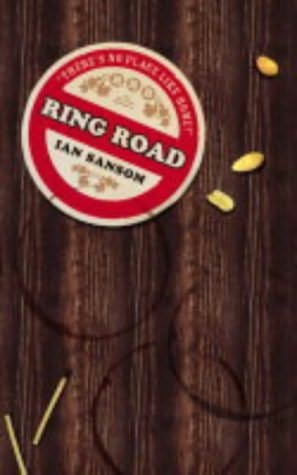 copy without returning it so I started Ring Road instead. It’s not crime, but it’d be criminal to overlook it! (Ha bloody ha.)
How can I describe this book without making it sound as dull as ditch water? God knows how Ian Sansom pitched it to his agent. It’s about a small Irish town that has declined over the years, the decline symbolised by a busy ring road and a shopping mall. There is no central character, in the same way a TV soap doesn’t have a central character. Everyone’s life counts. And they have small town lives. Nothing exciting ever happens in this town, unless you consider a mayor on the make exciting, or a newspaper editor sacking the writer of the bat-watch column, or care about Mr Donnelly’s dog getting arthritis.
So how does Sansom make it all come to life? Well, I think this passage from the final chapter gives you a fair idea:
Strange, how even here in our town, a place where we all went to the same schools, wear the same kind of clothes, pretty much, give or take the occasional item of eccentric holiday headgear or party high heels, and where we watch the same television programmes, and eat the same kind of food at the same kind of time, and read the same papers, even here it’s possible for two people occupying the same space and time and the same brand of jeans and trainers to misunderstand each other completely and utterly. It does not bode well for the future of humankind – if we can’t read each other right around here, then where?In the simplest language possible, and with the longest sentences possible, the author makes these insightful observations throughout Ring Road. It’s a warm and funny book, respectful to its subject and, dare I say it, slightly eccentric. Footnotes can go on for over a page. The acknowledgements run for three pages and throws up names like Stevie Wonder, Jim Carrey, the Specials, George Clooney. Ring Road is the only novel I’ve read that features an index.
So yes, definitely eccentric, but also a work of genius, I think. A five star book I will read again.