Sunday, 9 March 2014

Tropic Moon by Georges Simenon


I'm a little frazzled from lack of sleep and the tail end of some annoying virus (infecting me rather than my laptop -- ho-ho-sigh) so I don't expect any major insights to hit the screen as I rattle through the motions here.

I do not blame Simenon for this mood, incidentally. Bet that's put him at ease.

He MIGHT Google this, no...? Ah, a Bing man, eh...? Oh, right. RIP, then.

Really enjoyed this read. Simenon made me feel uncomfortable, impressed and satisfied with a book that had a lot to say about racism. It was first published in 1933. 81 years on and it still seemed relevant. Mind-blowing.

My original reason for picking this up was that I was trying to find another example of behaviourist* POV. Took a roll of the dice with this one. French writer, same publisher as the Manchette translations I've read, it post-dates Hammett's The Maltese Falcon by four years (though I haven't looked into when TMF might have seen a French translation)... alas, this was an example of third person limited (a good example) and not third person objective POV. Still, a worthy read. I'll hunt out more of these romans durs and probably look for a Maigret omnibus too. Some time.

Here's a link to a recent(ish) review of the book on The Guardian website. It seems entirely on point to me.

*a current obsession mentioned and poorly explained in a good portion of the books I've documented since January. I'll actually write a post about the writing POV when I'm more adept at explaining it.

Wednesday, 5 March 2014

Nivelli's War by Charles Way - presented by Cahoots NI


Last night I attended the opening performance of Nivelli's War by Charles Way with my wife and my nine-year-old daughter at The MAC Theatre in Belfast. I am indebted to the play now, as it provided such a spectacular introduction to 'grown-up' theatre to my first-born.

Cahoots NI presented an intensely atmospheric play that had my daughter giggling one second and squeezing my hand in anticipations of danger the next. The cast is stellar: Dan Gordon, Sam Clemmett, Kerri Quinn, Abigail McGibbon, Bob Kelly, Michael Lavery and Faolan Morgan. The seven actors interact with each other like a well-oiled machine, each one providing their own special brand of magic in a show that relies heavily on suspension of disbelief. But if you believe in the magic, the payoff is more than generous.

Following the tribulations of young Ernst, a boy evacuated from his home in Frankfurt and then abandoned by his new carer, Tante Sophie, in mysterious circumstances, the play is set during the tail-end of the Second World War. German aristocracy, Russian and American soldiers and a snarky hobo contribute to what is at heart a tale about family and honour with a dash of the fantastical thrown in.

Every element of the production team was on point. If anybody missed a beat, I didn't pick up on it. The beautiful piano music, combined with a trigger-happy fog machine and moody lighting, created a world of smoke and shadows with occasional and powerful licks of colour, such as the wondrous image of a simple red balloon.

One of my performance highlights was the lesson in shrugging passed down from Mr H (Bob Kelly) to Ernst (Sam Clemmett). I was also steadfastly captivated by the understated yet mischievous performance of Dan Gordon as The Great Nivelli of the future who served as an active filter to the sad past.

Loved it. I urge you to go see it.

Nivelli's War will play at The Mac Theatre from 4-11 March. Book your tickets here.


Monday, 3 March 2014

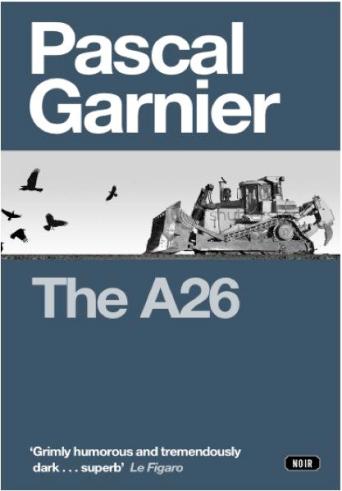
The A26 by Pascal Garnier


My first Pascal Garnier read, and far from a disappointment. It was chosen in the pursuit of another example of behaviourist POV (it seems to be a particularly popular choice in French fiction, you see), although on reading I found that The A26 didn't employ a very strict use of the perspective. Thoughts from the main characters were divulged in a number of places, and little was withheld from the reader.

And yet it still makes for an interesting study. At multiple points in the book there is a very definite narrative disconnect. In the opening chapter, for example, Yolande is described as "anywhere from twenty to seventy" and "You would catch a glimpse of her sometimes in a way she had of sitting down, tugging her skirt over her knees, of running a hand through her hair, a surprisingly graceful movement in that wrinkled skin glove." A powerful picture of an aging woman, and very much one from the author's perspective rather than Yolande's. This style of description pops up throughout and serves to present the characters, almost like displays in a glass case.

Especially in Yolande, this style contributes to a separation from the real world. Her self-imposed isolation is tempered only by the fact that her brother, Bernard, lives in the same house as her. But he's not really company. More of an enabler of her strange behaviour. He entertains her, provides for her, goes out to get the groceries that she won't leave the house for. But he won't be around to act as Yolande's carer for much longer. It is quickly revealed that he is terminally ill, and not for this world much longer.

And this illness provides a freedom for Bernard that allows him to take on a perverse crusade along the developing A26 motorway that is being constructed close to his house.

The A26 is an odd little book, but incredibly captivating. It's an addictive read and a fascinating insight into a couple of very damaged people. This is not a story that will provide a satisfactory resolution to crime, but rather it explores how the deeds themselves can punish the perpetrators. I loved it for its ugliness, and will read more Garnier quite soon, no doubt.

Sunday, 2 March 2014

It's an honour, of course... now help me win!


Big Al's Books and Pals have announced the shortlists for their 2014 readers' choice awards, and I've made it into the crime fiction category. Here's how the list looks:


  • Aye, no bother at all, like.

    So, yeah, that's how stiff the competition is. If you fancy throwing a vote my way, you can find the categories here. Get clicking!


    You can read an extract from WEE DANNY on Austin Tanney's blog.

    Saturday, 1 March 2014

    The Getaway by Jim Thompson


    Everything I wanted to say about this book has been coloured by the somewhat surreal ending. But I don't do spoilers on this blog (no matter how old the book is), so that makes writing about this one rather difficult. So let's just say it was a humdinger, eh? Highly recommended, if you care.

    Thompson did a few interesting things with POV in this one as well. Not strictly behaviourist as I've come to understand it, but certainly it borrows from the style in parts to heighten tension and/or intrigue.

    If you want a great read about a couple of charming criminals and the lengths they'll go to to getaway (see what I did there?), and you enjoy a writer with a keen sense of justice, then you could do a lot worse than to visit Doc and Carole McCoy's world.

    Friday, 28 February 2014

    Poets!


    I attended the launch of David Park's The Poets' Wives last night at the Belfast Museum, an event organised by David Torrans of No Alibis Bookstore in Belfast. And it was an excellent affair all together.

    Colin Reid's musical introduction was a hauntingly beautiful performance, despite the 'positive feedback' experienced by his guitar amp for a short time. Check out some of his mad guitar skills on YouTube. I've picked a tune that's slightly more upbeat than those performed last night (thought last night's pieces were well chosen for the venue and atmosphere), simply because it's Friday morning.

    We also heard from Park's publisher (I should have written the lady's name down, feel free to nudge me if you know it). It was a glowing tribute, as you'd expect. Park has made Bloomsbury his literary home for a decade and a half now, and there are no signs that his welcome is wearing thin.

    Damian Smyth from the Arts Council of Northern Ireland spoke for a short time (two pages!) about Park, his work and the achievements stemming from it. Smyth almost stole the show by announcing that The Poets' Wives will be Belfast's 'One City, One Book' this year; an honour previously bestowed upon Glenn Patterson and Lucy Caldwell.

    Then David Park himself said a few words. It was my first time hearing him talk, and I was pleasantly surprised by his seemingly effortless wit and charm. For some reason (perhaps because he doesn't put himself out there that often -- or maybe I'm not looking in the right places for him) I thought he would be rather quiet and reserved. But he made me, and the audience, laugh more than once before reading from his novel.

    Speaking of the audience, there had to be close to 200 people in attendance. A wonderful show of support for a writer that deserves it.

    Belfast Poet Laureate and T.S. Elliot prize winner, Sinéad Morrissey, contributed to the night by reading poems connected to Park's novel; works by William Blake and Osip Mandelstam. The microphone may have played up on her a little, requiring some of us at the back of the room to lean forward and listen a little harder. And lean we did, quite precariously. Luckily, Morrissey's words gave us something to hang on.

    David Torrans rounded up the event efficiently and then supplied me with the novel on my way out the door.

    All-in-all it was an inspiring event, and one that gave me a feast for thought on my 30-mile drive home.

    Incidentally, it was a pleasure to bump into a couple of young poets at the museum. All the best to Stephen Sexton and Stephen Connolly (and thanks for the free magazine, Mr Connolly), both PhD students at QUB, and a dapper pair of gentlemen. They made me wish I'd ironed my shirt.

    Thursday, 27 February 2014

    Equal Danger by Leonardo Sciascia


    At a little over 100 pages, I suppose this should be classified as a novella. It took me quite some time to read it, however. Longer than it's taken me to read some novels. The prose is dense, the sentences long and there is a hell of a lot of telling, and not much showing in those opening pages. Ordinarily, this is the type of book that I would happily avoid. However, one of my PhD supervisors recommended it to me as an example of behaviourist POV, and since that's my current literary obsession (and will likely continue to be for the next few years) I pushed myself to read it, rather than give up after those initial confusing pages.

    Am I glad I persevered?

    Yes.

    It took me about 15 pages to get used to Sciascia's style, and by then it had changed somewhat. With the introduction of the first suspect (the crime being the serial killing of of a district attorney and a number of judges) the writer introduces dialogue. This marks a switch from telling to showing, and the point from which the story became much more accessible to me. I was also able to get a better handle on the main character, Inspector Rogas, as he interacted with these suspects.

    I wonder if Sciascia had started with a scene featuring dialogue, or a more focussed/detailed look at Inspector Rogas, would I have found this an easier read? Probably.

    But that's by the by. In the end, the book won me over, and interestingly, when I flicked back to the start I found the opening pages much more accessible. I'm beginning to think that this read was a good burst of exercise for my brain. And I'll be thinking about Equal Danger (and what I can take from it as a writer) for a while to come.

    Saturday, 22 February 2014

    No Alibis Event, 27/2/14

    David Park
    With Special Guests Sinéad Morrissey & Colin Reid

    Thursday 27th February 7:00PM
    Venue: Ulster Museum


    http://www.noalibis.com/images/DavidPark.jpg

    No Alibis Bookstore, in association with Bloomsbury Publishers and the Ulster Museum, invite you to celebrate the launch of David Park's latest novel, THE POETS' WIVES, on Thursday 27th February at 7:00PM in the Ulster Museum, Botanic Gardens, Belfast.
    Special Guests Sinéad Morrissey & Colin Reid will also be on hand to read and play music. Sinéad will read poem by Russian poet Osip Mandelstam, who features in the novel. Colin will be playing guitar….well, as it is Colin, he will be making it Sing.
    This is a FREE event, but tickets are required, and are now available from No Alibis Bookstore.

    NO ALIBIS BOOKSTORE
    83 BOTANIC AVE
    BELFAST BT7 1JL
    NORTHERN IRELAND
    02890319601

    One Bite at a TIme

    Author Dana King has posted a Q&A with yours truly over at his excellent blog, One Bite at a Time. It starts out like this:

    "Twenty Questions With Gerard Brennan


    Gerard Brennan came to my attention through his essay, “The Truth Commissioners” in Declan Burke’s comprehensive examination of Irish crime fiction, Down These Green Streets. His contribution to the Fight Card series (Welcome to the Octagon) hooked me on his fiction, and The Point reeled me him. His sequel to The Point—Breaking Point—has recently been released, and Gerard was kind enough to take a break from his PhD studies to play Twenty Questions.


    One Bite at a Time: Tell us about Breaking Point.

    Gerard Brennan: I like to think of it as belonging to the same sub-genre as the movie Pineapple Express and other slacker-type flicks and TV shows. Notice I didn't mention books? Yeah, me too. Because I can't think of a novel or novella that attempts the same. Could well be down to a deficit in my reading, though..."

    Thanks, Dana!

    Get the rest of the questions and answers here.

    Tuesday, 18 February 2014

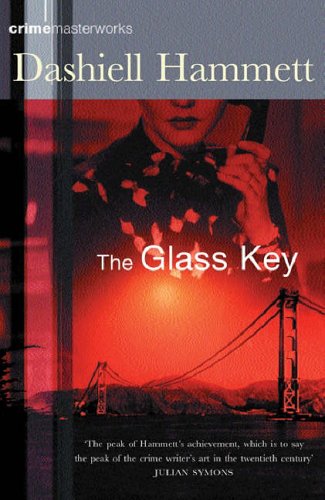
    The Glass Key by Dashiel Hammett


    My latest read in the pursuit of tales told using 3rd person objective POV (AKA behaviourist/behaviorist POV) was Dashiell Hammett's The Glass Key. I read somewhere on the internet that this was said to have been Hammett's own favourite of his novels (a quick internet search kind of supports this: Wikipedia - be wary of spoilers), and I think I see why. The Maltese Falcon is also written in this cinematic POV, and in my opinion is a pretty straightforward caper. The Glass Key is a more complex work, and yet many of the answers to the mystery are incredibly simple - in a good, non-convoluted, way. A neat trick to pull off. I guess that's why Hammett is cited as a master time and again.

    The protagonist in The Glass Key seems to be pretty heavily based on Hammett himself (physical appearance, contrariness, shared health ailments) which may explain why Ned Beaumont struck a chord with many, more so than big Sam Spade, the blond devil. Personally, I enjoyed the deficit between Beaumont's hunger for action and the lack of physical ability to get himself out of harm's way. He's as bull-headed as Spade, but more likely to come off worse in an altercation.

    Also, Beaumont describes himself as an amateur detective, a gambler and a political hanger-on at different points in the novel. His self-awareness carries a charm at odds with some of the shitty things he says.

    With regards to the POV, in The Maltese Falcon it basically conceals the intentions of the characters, especially those of Sam Spade. The Glass Key seems to be less concerned with intention or motive, and instead what is held back is personal knowledge and emotional attachment. It's more concerned with longstanding relationships and how they might be affected by betrayal, self-preservation, suspicion of murder... all that good stuff.

    I liked this one a lot, and I think it could well be my favourite Hammett book. I haven't read them all yet, but I will, so I'm interested to see how the rest hold their own as I get to them.

    That's all folks. I should be writing.