Showing posts sorted by relevance for query dead I well may be. Sort by date Show all posts

Tuesday, 13 May 2008

A Wee Review - Dead I Well May Be by Adrian McKinty

What does that merry aul codger Frank McCourt have to say about Adrian McKinty’s work? “His prose is so hard, so tough, so New York-honest, you’ll find yourself taking a knife to your work. He is a cross between Mickey Spillane and Damon Runyon - the toughest, the best. Beware of McKinty.”

Not a bad recommendation, eh? Well, if my opinion means anything to you, I think McKinty is a hard-hitting writer with a serious attitude problem. But he’s not just dealing out a violent gangster tale with Dead I Well May Be. This novel oozes elegant prose and poetic internal dialogue.

Michael Forsythe takes the narrative helm in Dead I Well May Be. The story is set in the early nineteen-nineties and Forsythe is a young man approaching twenty, feeling the pinch of unemployment in his native Belfast. Although he’s not keen on it, he goes to New York to seek employment through a contact with Irish Mob boss, Darkey White. He soon rises through the ranks, proving himself time and again as the most competent and ballsy member of his crew. But he makes one fatal error and Darkey shows no mercy.

The first thing to strike me while reading Dead I Well May Be was the ease with which McKinty introduces us to Harlem. In just a few pages he builds a real world of sights, smells and sounds. I was right there in the middle of the humidity, clamour and squalor. Any writer could learn a lot from those pages of prose. In fact, every writer should. From then on, I was hooked into this book and couldn’t wait to get to the end, just to write a glowing review. From Harlem to Mexico to Belfast, the descriptive prose invigorates this novel.

One of McKinty’s greatest strengths is his ruthlessness. He seems to hate his protagonist, placing him time and again in impossible situations and never letting him escape unscathed. But the beauty of it is, with each trial and tribulation, the reader’s respect for young Michael goes up a notch. Seriously, if I had the chance to shake this man’s hand... well, I’d pass. Just in case I insulted him in some way and ended up on his bad side. But I’d give him a nod of admiration before turning on my heels and putting a lot of distance between us.

There aren’t really any weaknesses in Dead I Well May Be, in my opinion. The decision to ignore the concept of speech marks caused me to stumble over a sentence or two, which had the annoying effect of pulling me out of the story. But other than that, we have a huge story that is poignant and exciting. Dead I Well May Be is as brutal and unforgiving as a Belfast Six-pack but it’s told with literary eloquence and style. Is it any wonder I picked up The Bloomsday Dead minutes after putting down this one?

BUY THIS BOOK!

And while you do that, I’m going to email a few people and see if we can get it on a few Northern Irish bookshelves. You never know, somebody might take note.


Thursday, 12 June 2008

A Wee Review - The Bloomsday Dead by Adrian McKinty


Impressed as I was with Dead I Well May Be, I jumped right in to the next Adrian McKinty book I could get my hands on; The Bloomsday Dead. This is the final part of McKinty’s Dead trilogy featuring the un-effing-killable protagonist, Michael Forsythe. For a full appreciation of the novel, I highly recommend that you read Dead I Well May Be first. And as rumour would have it, so does Mr McKinty, actually. Oh, and see his extended interview on Crime Always Pays for a real insight into his whys and what fors in writing the trilogy. A CSNI review of The Dead Yard will follow in due course, but since the Serpent’s Tail paperback of The Bloomsday Dead is set for release on the 12th of June, I thought it’d be a good idea to give you readers time to crack open those piggy banks and get to buying McKinty’s work.

On with the review!

The Bloomsday Dead finds Michael Forsythe living it down in Lima, Peru. He’s on the run from the New York Irish Mob through the FBI Witness Protection Programme. His past sins against the mob include a bunch of spoilers for Dead I Well May Be, so forgive me for not going into further detail. Just know that this book takes us from Lima to Belfast with some flashbacks to Forsythe’s time in New York. And again I’m impressed by McKinty’s skill at painting his surroundings vividly by showing rather than info-dumping a knowledge that he’s obviously gleaned through personal experience. Google and read up a thing or two about Adrian McKinty and you’re not long figuring out he’s a wandering soul, as is his protagonist from the Dead Trilogy (though for slightly differing reasons – I hope). However, Forsythe’s love/hate relationship with Belfast is made all the more real, I suspect, by the fact that McKinty has not lost touch with his Northern Irish roots.

Michael Forsythe’s role has matured as has his characterisation. He’s no longer the white-hot fury that scorched the pages of part one. That’s still part of his make-up, but he’s also developed a world-weariness that is put across expertly. And revenge is not his sole driving-force in this final part. He has taken on the part of an investigator. A badass, heavy-handed and morally complex investigator, but all the more interesting because of it. So many times in this downward character arc I was convinced the guy had to give up the ghost and lie down for the next two hundred, then one hundred, then fifty then ten pages of the book. Michael Forsythe struggles towards the denouement scrapping, spitting and cursing, always considering surrender but finding it beyond his nature. A fascinating thing to witness.

The ending, I can’t really talk about (I’m anti-spoiler, remember?), though at one point Forsythe compares it to a Spanish Soap Opera, which is hard to argue against. And as the reader wrestles to suspend his disbelief and allow the impact of the surprise twist, so does the protagonist. A risky way to play it, as some critics could argue that McKinty’s having trouble believing it himself, but I personally think it works. And it makes for some real emotional writing from the expert in heart-wrenching that is Adrian McKinty.

And so, this bastard child of Tony Soprano morality and James Joyce literacy ends the Michael Forsythe trilogy. I’m sad to see the thug go, but hey, everything has to end some time. And we’ve Adrian McKinty’s Fifty Grand to look forward to in the not-so-distant future.

Incidentally, Adrian McKinty is journeying all the way from Australia to launch the release of The Bloomsday Dead at No Alibis Bookshop, Botanic Avenue, Belfast. The event is set to start at 6.00pm on Wednesday the 11th June. Not a kick in the arse off the actual Bloomsday date, 16th June (A James Joyce related celebration). Be there! But if you can’t, he’ll be in England as well. Will post dates and locations soon for you English McKinty fans.


Thursday, 25 September 2008

Mike's Second Opinion - A Triple Review


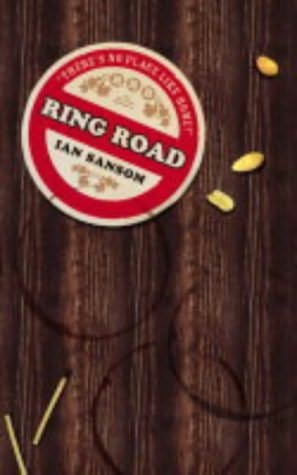
I think I’m under the CSNI influence. I’m predominantly a science fiction/fantasy man, so will somebody explain why I recently came home from a shopping trip with Lucy Caldwell’s Where They Were Missed, Adrian McKinty’s Dead I Well May Be and The Dead Yard (I won the third book, The Bloomsday Dead, in a CSNI competition), and two Ian Sansom books, The Case of the Missing Books and Ring Road.

There seems little point reviewing these books as the CSNI blogmeister has already done just that. Consider the following a second opinion.

First of all I read Lucy Caldwell’s book. I was a tad confused at first by the setting. What era was I in? The cover places it in the late sixties/early seventies, whereas the narrative suggested a later date. And so it was. The moral is: pay no heed to covers, they be the work of someone who hasn’t read the book!

This is the story of two young sisters growing up in the mid-eighties. scarcely comprehending the social chaos around them, whether it’s the Troubles, their Catholic mother’s depressions or their Protestant daddy leaving home. It’s told from the POV of the seven-year-old Saoirse and the innocent voice never falters: an adult perspective is not allowed to intrude on the child’s world. I was massively impressed when I turned a page and thought, oh, she’s grown up. Lucy Caldwell had advanced the timeline nearly ten years and I knew it straight away, just from the central character’s voice.

This is a quiet book, and there’s a melancholy undercurrent, but it manages to avoid being depressing. I actually found it uplifting without being sappy or mawkish, thanks mainly to Saoirse being strong and feisty. She makes mistakes, but learns from them and grows. At the end I closed the book and wished her well for the future. It’s that kind of read.

I could easily argue that Where They Were Missed isn’t a crime novel and doesn’t really merit a place on CSNI, but that would be silly. Who gives a fig about genres when a book is this good. I loved it. Four stars out of five.

For contrast, I then picked up Adrian McKinty’s Dead I Well May Be. I knew from the reviews I’ve read on these webpages that there was going to be violence, bloodletting and, most importantly, top quality writing. What can I say that hasn’t already been said?

The main character, Michael Forsythe, is a complex bloke. He genuinely looks for the good in people . . . but that doesn’t stop him from putting a bullet in a guy’s elbows, knees and ankles – a Belfast sixpack – in the first chapter. Well, Forsythe reasons, if he hadn’t done it, someone else would’ve, and likely made a hash of it too. Better for the victim that he does it. See? The guy’s all heart really. OK, I’m making a joke of it it, but really, Adrian McKinty does a bang-up job of presenting us with a central character who is incredibly resilient and at times ruthless, but allows us to see him experiencing pant-wetting fear, self-doubt and suicidal despair. Forsythe’s a bastard, but he has his reasons and you can’t help but admire him. From a distance.

I haven’t even waxed lyrical about the Adrian McKinty’s prose yet, which borders on the poetic, or how effectively he uses fragments, something I’ve hitherto not cared for. Nor have I said how bloody good he is at creating a sense of place, or how cleverly he uses foreshadowing to keep you reading one more chapter before you put the book down. I’m not going to prattle on about these things because this isn’t meant to be a review, just a quick appraisal. Dead I Well May Be is an awesome book, the best I’ve read in a long time. Some folks are telling me the second book is even better. That takes some doing. No hesitation, five stars.

I wanted to read the first of Ian Sansom’s Mobile Library books next, but my dad borrowed my copy without returning it so I started Ring Road instead. It’s not crime, but it’d be criminal to overlook it! (Ha bloody ha.)

How can I describe this book without making it sound as dull as ditch water? God knows how Ian Sansom pitched it to his agent. It’s about a small Irish town that has declined over the years, the decline symbolised by a busy ring road and a shopping mall. There is no central character, in the same way a TV soap doesn’t have a central character. Everyone’s life counts. And they have small town lives. Nothing exciting ever happens in this town, unless you consider a mayor on the make exciting, or a newspaper editor sacking the writer of the bat-watch column, or care about Mr Donnelly’s dog getting arthritis.

So how does Sansom make it all come to life? Well, I think this passage from the final chapter gives you a fair idea:
Strange, how even here in our town, a place where we all went to the same schools, wear the same kind of clothes, pretty much, give or take the occasional item of eccentric holiday headgear or party high heels, and where we watch the same television programmes, and eat the same kind of food at the same kind of time, and read the same papers, even here it’s possible for two people occupying the same space and time and the same brand of jeans and trainers to misunderstand each other completely and utterly. It does not bode well for the future of humankind – if we can’t read each other right around here, then where?
In the simplest language possible, and with the longest sentences possible, the author makes these insightful observations throughout Ring Road. It’s a warm and funny book, respectful to its subject and, dare I say it, slightly eccentric. Footnotes can go on for over a page. The acknowledgements run for three pages and throws up names like Stevie Wonder, Jim Carrey, the Specials, George Clooney. Ring Road is the only novel I’ve read that features an index.

So yes, definitely eccentric, but also a work of genius, I think. A five star book I will read again.

Thursday, 17 July 2008

A Wee Review - The Dead Yard by Adrian McKinty


The Dead Yard is the second of Adrian McKinty’s ‘Dead’ trilogy featuring Michael Forsythe, and is bookended by Dead I Well May Be and The Bloomsday Dead. The American release of The Dead Yard was picked as one of the twelve best novels of 2006 by US Publishers Weekly. Not the best crime novel. The best novel! And the audiobook version won audiobook of the year. Inside information suggests that it didn’t sell incredibly well in the UK by comparison, and this reader has some difficulty understanding why.

The Dead Yard sees the hard-as-coffin-nails protagonist, Michael Forsythe’s, return to action. For five years, since his violent deeds in Dead I Well May Be, he has lain low in the Witness Protection Programme. Unfortunately, his itchy (ahem) foot takes him to Tenerife, and because trouble follows him like ‘sharks trailing a slave ship’, he finds himself right in the middle of an Irish vs. English football riot. He does what he can to keep out of it, but gets scooped by the authorities. He’s in a lot of trouble. Especially since he’s wanted in Mexico for drug trafficking and escaping a Mexican prison. In the face of ten years jail time and then extradition to Mexico, when an offer is extended by the English government he really has no choice. In exchange for his guaranteed freedom he agrees to go under cover and infiltrate an IRA sleeper cell in New England, America. Bad enough, but don’t forget to factor in that the Irish Mob in New York has a price on his head. Can it get worse? Well, yeah. This is Michael Forsythe we’re talking about. It’s about to get deadly.

I happened to read this book slightly out of sequence with the other two Forsythe books. The Dead Yard, however, is certainly the more standalone of the trilogy. There are some hints of what is to come in The Bloomsday Dead, but no spoilers. Just a book full of shit-hot writing. McKinty’s prose is a thing of beauty. Awe and envy-inspiring poetry. And then, next to this beautiful use of language, McKinty’s protagonist and subject matter provide you with enough ugly to spin the yin-yang symbol out of orbit. Michael Forsythe imagines himself as Death’s apprentice more than once in this gripping tale, but I think he’s downplaying his status. The boy is Death with a limp. He’s a literate, scary, emotional, violent, wonderful, horrible enigma of a thug. A Belfast protagonist to be proud and ashamed of. A fascinating bastard. I’m a little depressed that I’ve read the whole trilogy and that McKinty has put an end to the Forsythe series. But there’s a logic behind the author’s decision. One more dance with the Grim Reaper and readers might yell, ‘Oh, come on!’ and click off. There are only so many times you can expect Forsythe to get through the fug of violence that follows him around.

So, here I am, trying to dream up a criticism of The Dead Yard to balance this review out a little. But I’ve come up blank. Maybe because it was the most recent read, but this could my favourite of the ‘Dead’ trilogy. Which begs the question once again, why is The Dead Yard the least popular of the three Forsythe books in the UK?

I’ll speculate a little.

Maybe it’s because this is McKinty’s ‘Troubles’ book. Yes, it plays out in America, but this story is set on the verge of the IRA’s 1997 ceasefire, just before the Good Friday Agreement. A shaky peace deal is on the horizon. The English government wants to stamp out a maverick group, known as The Sons of Cuchulain, before they destroy the budding Peace Process. We have seen a hell of a lot of work based on the ‘Troubles’. Ireland and the UK are coming down with IRA stories. Some are better than others, and in this case, much better, but at the end of the day, people are looking for new settings and themes. America, however, still has quite an interest in this kind of thing, especially among the Irish-American communities. With the luxury of distance, they maybe have a romantic idea of the struggle and are open to more from this sub-genre. And McKinty has given it to them in spades.

My conclusion; if you’re going to read one more work of fiction based on the ‘Troubles’, make it The Dead Yard by Adrian McKinty. It’s a Belfast/Boston blinder.

Saturday, 12 April 2008

A Micro Review - Dead I Well May Be by Adrian McKinty

Gerard is eager to read this one, but until he has a chance to get his grubby mits on a copy and do his own review, Colman Keane, an avid fan of the noir and hardboiled has helped out by sending some thoughts on the first Michael Forsythe novel, Dead I Well May Be. So without further a foreword, take it away, Mr Keane.

I’m a bit late to the party considering Serpents Tail first published this in the UK in 2004, but as the saying goes better late than never!

Michael Forsythe, intelligent but unemployed, makes an enforced jump from Belfast to Harlem and swaps a grim future for an uncertain one. Soon in the employ of Darkey White – an Irish crime boss, Michael shows his mettle in the growing conflict with the Dominican gangs in the New York turf wars. Whilst proving his worth, Michael soon finds it doesn’t pay to cross his leader.

I enjoyed the change of settings as Michael moved from NI to the US and Mexico and back– flitting through the differing landscapes, and backwards and forwards through time as he recalls events from his past. His struggle to journey back and wreak violent revenge on Darkey is compelling.

Whilst there’s a fair bit of action throughout it’s not all bish, bash, bosh as McKinty’s prose is thoughtful and intelligent, without ever disappearing up his own arse.

The pace is relentless and the satisfactory conclusion cleverly leaves scope for a follow up.

What defines an Irish crime novel?

Is it the author’s birthplace or the scenery where the action plays out?

By any standards and whatever the definition, McKinty has crafted a superb book that is worthy of a place on the top table, on either side of the Atlantic.

Like a decent pint, Dead I Well May Be will leave you thirsting for more

Colman Keane

Thursday, 10 June 2010

Adrian McKinty

This interview first appeared on CSNI 7th April 2008

I also interviewed Adrian on Allan Guthrie's Noir Originals

Adrian McKinty was born and grew up in Carrickfergus, Northern Ireland at the height of the Troubles. He studied politics at Oxford University and after a failed legal career he moved to the US in the early 1990s. He found work as a security guard, postman, construction worker, barman, rugby coach and bookstore clerk before becoming a school teacher in Denver, where he now lives.
Q1. What are you writing at the minute?

A novel called Fifty Grand about a cop from Havana who comes to America to investigate a suspected murder.

Q2. Can you give us an idea of Adrian McKinty’s typical up-to-the-armpits-in-ideas-and-time writing day?

I’m not one of those up at six and write 1000 words before breakfast types. For me its more like an hour here and an hour there in between dealing with the kids and school (I’m a teacher).

Q3. What do you do when you’re not writing?

I play rugby when I get the chance and lately I’ve been doing a bit of skiing here in Colorado.

Q4. Any advice for a greenhorn trying to break into the crime fiction scene?

Read tons and not just in the genre.

Q5. Which crime writer(s) have impressed you this year?

I’ve discovered James Ellroy’s later fictions The Cold Six Thousand and American Tabloid and they’re both fantastic.

Q6. What are you reading right now?

Take a Girl Like You by Kingsley Amis

Q7. Plans for the future?

I’d like to write a book about the year I spent in Jerusalem but what exactly I don’t know.

Q8. With regards to your writing career to date, would you do anything differently?

I’d do everything differently. If I’d known how important promotion was going to be I’d have gone mad promoting Dead I Well May Be. The book got starred reviews in all the trades but Simon and Schuster didn’t spend a dime on advertising so the starred reviews meant nothing. I should have stopped everything and gone around the country promoting the book on my own dollar and really tried to make a big splash. The lesson is you can't rely on the publisher, you have to work all the angles. Writing the book is only half the story, you have to go out there and sell the bloody thing with or without the help of your publisher.

Q9. Anything you want to say that I haven’t asked you about?

Nope, not really. When you read Dead I Well May Be you’ll have some questions about knee capping, but until that happy time…ciao…


Thank you, Adrian McKinty!

Monday, 7 April 2008

An Interview - Adrian McKinty

Adrian McKinty was born and grew up in Carrickfergus, Northern Ireland at the height of the Troubles. He studied politics at Oxford University and after a failed legal career he moved to the US in the early 1990s. He found work as a security guard, postman, construction worker, barman, rugby coach and bookstore clerk before becoming a school teacher in Denver, where he now lives.
Q1. What are you writing at the minute?

A novel called Fifty Grand about a cop from Havana who comes to America to investigate a suspected murder.

Q2. Can you give us an idea of Adrian McKinty’s typical up-to-the-armpits-in-ideas-and-time writing day?

I’m not one of those up at six and write 1000 words before breakfast types. For me its more like an hour here and an hour there in between dealing with the kids and school (I’m a teacher).

Q3. What do you do when you’re not writing?

I play rugby when I get the chance and lately I’ve been doing a bit of skiing here in Colorado.

Q4. Any advice for a greenhorn trying to break into the crime fiction scene?

Read tons and not just in the genre.

Q5. Which crime writer(s) have impressed you this year?

I’ve discovered James Ellroy’s later fictions The Cold Six Thousand and American Tabloid and they’re both fantastic.

Q6. What are you reading right now?

Take a Girl Like You by Kingsley Amis

Q7. Plans for the future?

I’d like to write a book about the year I spent in Jerusalem but what exactly I don’t know.

Q8. With regards to your writing career to date, would you do anything differently?

I’d do everything differently. If I’d known how important promotion was going to be I’d have gone mad promoting Dead I Well May Be. The book got starred reviews in all the trades but Simon and Schuster didn’t spend a dime on advertising so the starred reviews meant nothing. I should have stopped everything and gone around the country promoting the book on my own dollar and really tried to make a big splash. The lesson is you can't rely on the publisher, you have to work all the angles. Writing the book is only half the story, you have to go out there and sell the bloody thing with or without the help of your publisher.

Q9. Anything you want to say that I haven’t asked you about?

Nope, not really. When you read Dead I Well May Be you’ll have some questions about knee capping, but until that happy time…ciao…
Thank you, Adrian McKinty!

Friday, 9 May 2008

Finking About Fings On Friday


Been an excellent reading week for Gerard “Bookworm” Brennan (a wee nickname I’m trying out – dashing, eh?) as I’ll now explain.

I’m taking a half day at the aul dayjob so I can swoop home, pick up the missus and make my way to No Alibis for the Connolly-Hughes event. But in a rare moment of peace, I’m contemplating the Norn Iron crime fiction scene and how little attention it gets. No taking away from the hugely accomplished and talented Dublin boys, but they sure are whipping up a media frenzy round here. Well, I recycled the post the other day, but for a one man show, that’s a frenzy, okay?

Anyway, at the minute I’m reading Dead I Well May Be by Adrian McKinty. And I’m loving it. What bugs me is I tried to buy it from four or five high street bookshops in Belfast, Newry and Lisburn cities and came back empty handed each time. In the end I snagged a copy at the Belfast Central Library’s Irish and Ulster Studies Department. I’m sure I’d have gotten it from No Alibis, but the last time I was there, Dave Torrans was overrun by a bunch of unruly Glen Patterson fans and I didn’t want to add to his stress by asking him to shift a display of Patterson’s recently released work. I might have to today though. The book’s a blinder!

I’m closing in on the denouement at a nice pace, and I have The Bloomsday Dead (courtesy of Serpent’s Tail) waiting to be read after this one. Expect some McKinty reviews soon. I don’t want to be straying from my point.

So listen, right? WHY AREN’T WE PROMOTING THE HUGE TALENTS FROM THIS PROVINCE?! Well, I am, and so’s Verbal Magazine and a good number of starving stalwarts such as Declan Burke and Critical Mick (and they live south of the border too); but come on the high street. Make it a bit easier for us scamps out buying books on our criminally short lunchbreaks. Same thing happened a few years ago when I was set to meet SF superstar Ian McDonald. Couldn’t get a hold of one of his books for love nor money so I don’t think it’s because McKinty fecked off to live in another country.

Who do I see about this?

Oh, and just so I’m not ending this on a ranty note, Declan Burke’s book, The Big O, thumped the doormat this week too. I had a peek at the first couple of chapterettes, and unfortunately it looks like the CAP GV isn’t going to be held up to ridicule here. Of course, he might drop the ball in later chapters... we’ll see.

Monday, 18 August 2008

An Interview - John Connolly


John Connolly was born in Dublin in 1968. He is no longer a ‘wunderkind’, if he ever really was, which saddens him greatly.

Q1. What are you writing at the minute?

I’m working on the latest draft of THE LOVERS, which is the next Charlie Parker novel. It’s been a frustrating business because I managed to delete a large section of the book earlier in the year, which set me back somewhat as well as taking a little of the wind out of my sails. It’s always difficult to judge a book at this stage. Actually, I find it hard to judge most of my own work at any stage, but I like the fact that it’s different from the previous book, which was very straightforward and action-oriented. It strikes me sometimes that each book I write is a reaction to the one that preceded it.

Meanwhile, I’m wondering what to do next. I have about four ideas that I’d like to pursue, two of which would not be series novels, and one of which isn’t crime at all. It's always a little worrying, that moment. I live in fear of choosing a bad idea, then finding halfway that I've written myself into a dead end. But perhaps there are no bad ideas, just the bad execution of them.

Q2. Can you give us an idea of John Connolly’s typical up-to-the-armpits-in-ideas-and-time writing day?

If I did, I’d be lying. I never seem to have quite as much time as I would like, and I’m never sure of the quality of my ideas until I start turning them into books. I’m usually at my desk by nine or nine-thirty, and then I work until lunchtime. I take a break to go to the gym, or just to read in a coffee shop somewhere, and then I’ll do a little more in the evenings, depending upon where in a book I am. At the moment, as I’m rewriting, I tend to stick to working on one chapter each day, as I find I skim over stuff otherwise. So, for now, I work on THE LOVERS in the morning and, at the moment, I’m reading the paperback proofs for THE REAPERS in the afternoon and evening. That’s tedious work, but necessary. Little mistakes are made when the book is typeset anew, and it’s a final chance to correct any repetitions of words or small errors that might have made their way into the hardback. I’m always amazed when writers tell me that they don’t bother with reading the page proofs, either hardback or paperback. It seems like the dumbest thing in the world to imagine that mistakes might not have crept through.

Q3. What do you do when you’re not writing?

I’m very dull. I read, I go to the gym, I watch TV, and I go to the movies. Then again, a lot of my year, when I’m not writing, is taken up with promotion, so when I’m home I tend to enjoy doing very mundane, but enjoyable, things. There’s a lot to be said for taking pleasure in simple pursuits.

Q4. Any advice for a greenhorn trying to break into the crime fiction scene?

I’ve never been one for giving advice, really. Each writer, whether published or hoping to publish, tends to be sui generis, and I’m distrustful of people who believe that other writers hold some kind of magic formula for success. I was in a taxi from Dublin Airport once, and made the mistake of telling the taxi driver what I did for a living. He told me that he was writing a book too, but was having trouble with some of the words.

“Where do you get all those words you use?” he asked me.

Um, er, well, when I’m stuck I use a dictionary.

I got a sneer from the driver’s seat. “Ah, a dictionary,” he said, in the tone of one who has just been told that the guy next to him had cheated on his exam.

In the absence of being able to assist people by selling them words on the black market, the only things I would say are that it’s necessary to persevere, as most writers suffer a lot of rejection before they’re published. Write what you’d want to read yourself, not what others are writing or what you think is popular at the moment. By the time you write it and submit it and, if you’re lucky, it’s published, that particular bandwagon will be long gone. Write a little every day, rather than imagining that you’re going to get half a book done over a weekend. And then rewrite. Then rewrite some more.

Q5. Which crime writers have impressed you this year?

Oh hell. Um, I haven’t read as much crimewriting as I used to over the past few years. I think I began to feel that a lot of it was repetitious, and I realised that there were all these other writers out there, both fiction and non-fiction writers, who were doing really interesting things. I liked Michael Chabon’s The Yiddish Policemen’s Union, even if Chabon is too clever by half, and knows it. Then again, I’ve recently discovered Don Winslow, and I think he’s wonderful: The Winter of Frankie Machine, The Power of The Dog… His new book, The Dawn Patrol, is also superb. I never thought I’d say that about a book that featured surfers.

Daniel Silva is also another new discovery for me. Those Gabriel Allon books are real pageturners, although I’ve yet to encounter a nice Arab in them, which makes me a bit suspicious. I’ve always been a sucker for espionage novels. I got to give Robert Littell a jacket quote a year or two ago, which I was actually honoured to do. He’s the American le Carré, I think, and I hauled THE COMPANY around in hardback a few years ago and didn’t begrudge him even the slightest twinge that it caused my back.

Q6. What are you reading right now?

A book called Hellraisers, which is a fairly lighthearted look at the careers of Oliver Reed, Richard Harris, Richard Burton, and Peter O’Toole. The writing is a bit horrible, though, all faux-laddishness. I occasionally feel like I’ve accidentally picked up a copy of Nuts magazine. After that, I have some manuscripts and ARCs to read, for some of which I’ve been asked to give jacket quotes. There’s only so much of that you can do each year though. Apart from gaining a reputation as a quote whore, it becomes a bit like homework, and there are a lot of books for which I’ve paid my own money that I’d kind of like to read as well.

Q7. Plans for the future?

Uh, not dying. That apart, I’m anxious to write the non-crime novel (well, it has a little bit of crime in it, but it’s historical and will be a bit of a departure), but there will be a lot of research involved so there may be a more mainstream book after THE LOVERS before that one comes along.

Q8. With regards to your writing career to date, would you do anything differently?

I don’t think so. I haven’t ended up in a bad position, all things considered. Mind you, I remain the only author to have been rejected by the Richard & Judy Book Club on the grounds of bestiality. Apparently, they didn’t like it when Little Red Riding Hood went off with the wolf in THE BOOK OF LOST THINGS. For a while, I used to wake up in the morning, then clutch my head and scream at the thought of what the selection might have done for that book, which I love dearly but didn’t have much luck at the time it was published. After a while, though, I started to wonder if I was the only person who didn’t think that the tale of Little Red Riding Hood was just about wolves dressed up as grannies. So, in retrospect, I wouldn’t even change that detail.
Q9. Anything you want to say that I haven’t asked you about?

You haven’t asked me if I’m well. I’ll start to think that you don’t care . . .

Thank you, John Connolly!


Thursday, 16 July 2009

Pics and Stuff From No Alibis Events


The latest No Alibis event I attended was Adrian McKinty's Fifty Grand launch on Wednesday the 8th of July. Just over a week ago now. In fact, this time last week, I was nursing a slight hangover.

Like last year's Bloomsday Dead launch, McKinty decided that an actual reading from the book wouldn't be all that impressive in itself. Having read Fifty Grand, I'd have begged to differ. But anyway, McKinty instead told us the story of his visit to cuba and how it birthed the first 100 pages of Fifty Grand. Then he got a bit of a Q&A on the go. And that was excellent! Most of the discussion centred on libel laws and he may or may not have slandered a few people, but I can't quite remember that.

After that he signed a bunch of books, including some spanking reprints of Dead I Well May Be and The Dead Yard in the lovely new Serpent's Tail editions for my good self. And while I queued for my signature I got talking to McKinty's charming mother, aunt and sister. Three wonderful ladies who have actually read my blog!

But the night got better and better, as I joined McKinty, Colin Bateman, Stuart Neville and David Torrans for a few jars after the event. It was a surreal experience for a fanboy like myself, but a bloody enjoyable one too.

Here's a few pics from that night and also a few from the John Connolly and Stuart Neville event that I never got around to posting. And if I can figure out how to upload it, a little video of Stuart Neville. Apologies for the quality. I'm not much of a photographer and I took all the pics and the video with my phone.


Adrian McKinty chatting to the crowd.

Colin Bateman and Adrian McKinty.


Stuart Neville, Colin Bateman, A little bit of Columbo and Adrian McKinty.

John Connolly reading from The Whisperers.

John Connolly signing a copy of The Lovers for a fan.


A short video clip of Stuart Neville.

Friday, 10 January 2014

Talkin' to Sam Hawken


What attracted you to Fight Card MMA?

I like boxing and have watched it for decades, but my interest in it had cooled over the last ten years in favor of MMA, which I find to be a deeper and more technical combat sport. MMA also continues to evolve and improve as the years pass, which makes watching it an exciting prospect because you never know exactly what you’re going to get and at what level.

Whatever the case, I had already read several Fight Card releases in their main line (the one set in the ‘50s), because in addition to being a fight fan I’m also a student of pulp fiction, especially Robert E. Howard. For those who don’t know, Howard was a prolific sports-pulp writer and was well known for his boxing stories. Fight Card’s traditional boxing tales hew very closely to the Howard model, though I notice less humor in them. They make for entertaining reads, but I didn’t feel as though the period setting was right for me.

In December of 2012, Paul Bishop — one of two men, including Mel Odom, who started the Fight Card line — posted a mockup cover of an MMA release that showed a woman in mid-punch, along with the title Rosie the Ripper. MMA, as I mentioned, was a growing interest of mine and I found myself particularly intrigued by women’s MMA, where some intense and creative fighting was going on. Immediately I thought this could be something I could do, but I had no instantaneous ideas and it was almost a year later when I came up with something and shared it with Paul, who went for it. I have a long (possibly boring) version of this story on my blog

Have you got any fight experience?

The short answer is no. I trained in boxing when I was in my mid-20s, but never even progressed to the point where I was safe to spar with other students. I found it a gratifying experience, but it costs money to train and I’ve never been exactly flush with cash. Consequently I have never gone back, even though there are a couple of excellent boxing and MMA gyms near my home.

Other than watching MMA, did you need to do any more research for the fight scenes?

Watching and reading are the biggies. Not just televised fights, but training videos on YouTube and all the other wealth of things available to those interested in the sport. A particularly helpful book is Mixed Martial Arts for Dummies, by Frank Shamrock. It may seem like it’s too basic for those who know MMA, but the step-by-step instruction and explication of the thought behind the techniques provides great value for a writer seeking authenticity. Which is to be expected, seeing as how it comes from Shamrock, one of the greats.

Who is your favourite MMA fighter (you can have more than one)?

As I say, WMMA is my thing, but I am going to shock a lot of people when I tell them Ronda Rousey is not my favorite fighter. Sure, she has great mat skills, but she seems like an awful human being and I like the fighters I follow to be decent people as well as athletes. Miesha Tate, who is one of my favorites, may not have the skill-set to be a champion anymore, but she’s generous to her fans, supportive of other athletes and generally a nice person.

I follow a few WMMA fighters online and have interacted with some of them. Fighters like Bec Hyatt, Cassie Robb, Michelle Waterson, Raquel Pennington and Roxanne Modaferri. Most of them aren’t stars, but they come to the sport the way I prefer fighters to come to the sport, and so they get my support.

On the male side of the equation, I have great respect for Johny Hendricks, who I think really ought to be the UFC Welterweight Champion right now. I’m also impressed with Travis Browne, who’s a real monster in the cage.

During a recent visit to No Alibis, David Torrans told me he'd love to have you over for an event. You tempted? Maybe for your next Serpent's Tail release?

Given that the majority of my fanbase, if such a modest audience can be called a fanbase, is in the UK and Ireland, I would absolutely love to cross the pond and meet everyone. When The Dead Women of Juárez was shortlisted for the Crime Writers Association John Creasy New Blood Dagger, and it looked as though I might win, Serpent’s Tail intimated that they’d fly me over, but obviously I didn’t win and that never materialized. I do have a passport, though, and I’m prepared to use it at a moment’s notice.

Thank you, Sam Hawken!

Saturday, 9 May 2015

Five Questions -- Steve Cavanagh

Steve Cavanagh was born and raised in Belfast and is a practicing lawyer. He holds a certificate in Advanced Advocacy and lectures on various legal subjects (but really he just likes to tell jokes). He is married with two young children. The Defence, has been chosen as one of Amazon's great debuts for 2015, as part of their Amazon Rising Stars programme. In 2015 Steve received the ACES award for Literature from the Northern Ireland Arts Council. 

Steve writes fast-paced legal thrillers set in New York City featuring series character Eddie Flynn. The Defence is his first novel. 

Find out more at http://stevecavanaghbooks.com/ or follow Steve on Twitter @SSCav


Eddie Flynn, lawyer, con man, drunk. How much of this is autobiographical, Steve? I know you're a lawyer. Two out of three wouldn't be too bad...

Well, while I was at University, and probably for a good few years afterwards, I would've been a man with a powerful thirst. One of my best mates, Mark, is a guy from my QUB Institute of Professional Legal Studies class, and the only reason I know him is because we both liked to turn up to the pub an hour before any social event began so that we could have a few before the crowd arrived. We didn't arrange it or anything, we just happened to be men with similar approaches to an evening's entertainment. I remember somebody once handed me a pint, the glass was soaking and the pint simply slipped right through my fingers. I had my order in for another one before the glass hit the ground. Now I have two small children. The rock and roll days are over. As for con man? There is a certain amount of sleight of hand in any good cross examination. That's where the overlap is between the courtroom and the back alley. Eddie straddles that line precariously.

I noticed that you used US spelling (eg color rather than colour) in the UK edition of your book. What's the craic with that?

Glad you spotted that. It was my editor's suggestion. As the book is in US English anyway with an American narrator, may as well go the whole hog. I think it helps a little with authenticating the American voice that I'm going for. I've noticed it before in John Connolly books and to be honest it's fine with me because it means I don't have as much work to do for US publication.

Ah! The mighty Connolly. It must tickle you that you're likely to be stocked out pretty close to him on the crime fiction shelf. Recommend one of his works, for the uninitiated. Please?

There is so much to recommend, but for the crime fan you simply have to read the Charlie Parker series. You can read them out of sequence, I have a little. But you get a far better experience reading them in order. Start with Every Dead Thing and work your way up. EDT is one of the best crime debuts you'll ever read. And the books just keep getting better. That's rare in series fiction. Yeah, I'm stoked that I get to be on a shelf with one of my heroes.

Your story in Belfast Noir was top notch and it featured an actual Belfastian solicitor. Any plans to set a novel in Belfast?

Yes, a solicitor and a barrister with the story focussed on barrister, Mack. I loved writing that story. It's a weird thing, I wrote The Defence as an escape, primarily for me. I was going through a hard time and I wanted to try writing again. If I had come home from a day's work being a lawyer in Northern Ireland and sat down to write for two or three hours about being a lawyer in Northern Ireland I think I probably would've gone insane. At the time I wanted to escape somewhere else for a few hours, into a different world. After I wrote The Defence I knew I wanted to write another book with Eddie Flynn - I find him very interesting and I can pretty much accomplish everything that I want to do right now, in fiction, using that character. If I ever give up the law, I may write a book set in NI but not at the moment. I have a few ideas, but for now I want to concentrate on Eddie's story.

You know we're pretty sold on The Defence at CSNI. Care to share a tag line for the next instalment?

This is the hard part, I'm terrible at writing blurbs. I can tell you that this next book is currently titled The Plea and, among other things, it looks at international money laundering, the grand jury system, and welcomes back some of the characters from The Defence. In the new book Eddie Flynn has two clients. Two cases. Both very different. One client is innocent and the other is guilty. He can only save one of them. It's an easy choice for most lawyers, but what if the guilty client was Eddie's wife? Will he sacrifice the life of an innocent man to save his wife? He's got 48 hours to decide. But no matter what choice he makes, the only certainty is that at eight o'clock on Saint Patrick's Day Eddie Flynn will die.


Monday, 26 January 2015

Disorder and Reorder

This image (from The Belfast Telegraph website) hints at the subject of DISORDER

I'm still a little discombobulated following the completion of my novel, DISORDER. Now, I say completion, but there will be more work, no doubt. Even if my PhD supervisors, by some great miracle, consider it a work of genius, they'll have suggestions for improvement, as will the small band of beta readers who have received the manuscript over the weekend. That's the thing with books. You'll find something to tinker with right up until the day it's published, and sometimes after that.

But back to the discombobulation (I'm getting my mileage out of that word -- yeah spellcheck, it's real). I happen to be a good chunk into another manuscript already and have ideas for another book that I'd like to start and finish this year. There are other projects in the works as well, but since the best way to hear God laugh is to announce your plans (hat-tip to Sam Hawken for that little pearl of wisdom) I'll not go into any detail about what they might be or how quickly I need/want to complete them.

So what's the point of this post? I don't know, really. Maybe I just want to mark the occasion of having completed another novel. Could be I'm procrastinating because today is the day that I plan to get neck-deep in my other novel-in-progress. Most likely I just want a reader or two to give me a virtual pat on the head and say, "Well done, Gerard."

In other news, my reading pile is diminishing at a quicker rate than it did in 2014. That was an example of God laughing at my plans, I think. I'd set myself the task of reading 100 books in that year. I stopped counting about five months in because I was running way behind schedule, but I'm sure I didn't make it to 100. Probaly closer to 50, truth be told. I did start reading faster after I stopped counting, though. A revelation that probably means something. I should note a few stand-outs that I never got around to reviewing. Just the NI ones for now:

Blue is the Night by Eoin McNamee

The FANTASTIC conclusion to McNamee's 'Blue' trilogy. I'm not sure what McNamee has planned next, but I feel like I could go back to the start of the 'Blue' trilogy and read it again before his next work of genius comes out anyway. There was a distinct closing of the circle at the denouement of this novel that drew my mind back to the The Blue Tango and Orchid Blue. I just wonder if I'll get around to that reread before the next McNamee becomes available to me.

The Final Silence by Stuart Neville

The Final Silence is the fourth of what has been dubbed the 'Belfast' series. I read this one during a busy time (hence the lack of review), and blazed through it. Neville publicly 'fessed up to a long bout of writer's block a little after the release of this novel. It was The Final Silence that bore the brunt of his dry patch. I'll not make light of the difficulties he experienced (which Neville outlines in this very honest blog post), but what I will say is that The Final Silence eventually became an excellent novel. A fine example of how to write a thriller. In fact, it's my favourite of his works now, a spot previously occupied by Collusion (which Neville also had trouble completing, if I remember right). The Final Silence very recently picked up an Edgar nomination. It seems I'm not alone in realising that this is a particularly strong book.

The Blame by Michael Nolan

Nolan does not see himself as a crime writer, and neither do I. However, due to the subject of The Blame (the aftermath of a bad batch of Ecstasy tablets), the work cannot help but touch on criminal activity in Northern Ireland. But this novella is not about the crime. It's about the protagonist trying to figure out if he is to blame for the death of a friend. And it's not just himself he has to convince. The question still remains unanswered for many in his circle of family and friends and those within his wider community. It's a fast and energetic read and a wonderful showcase for Nolan's developing writing talent. I hope to see a novel from him in the near future.

There may have been other NI novels that I failed to review, but they've yet to occur to me, and this post is getting too long as it is. In my next post, I'll simply list the books that inspired and facilitated the writing of DISORDER.

Currently reading The Dead Ground by Claire McGowan, by the way. I'd started it before the new year. Before I went to LA, in fact. The only reason I stopped after the first few chapters is because I didn't want to bring it on my journey to Bouchercon. It's a signed hardback, y'see. More on that one when I finish it.

Thursday, 1 July 2010

John Grant


John Grant is author of some seventy books, of which about twenty-five are fiction, including novels like The World, The Hundredfold Problem, The Far-Enough Window and most recently (2008) The Dragons of Manhattan and Leaving Fortusa. His “book-length fiction” Dragonhenge, illustrated by Bob Eggleton, was shortlisted for a Hugo Award in 2003; its successor was The Stardragons. His first story collection, Take No Prisoners, appeared in 2004. His anthology New Writings in the Fantastic was shortlisted for a British Fantasy Award. His novella The City in These Pages, an Ed McBain homage/cosmological fantasy, appeared from PS Publishing early in 2009; another novella, The Lonely Hunter, is to appear from PS later this year.

In nonfiction, he coedited with John Clute The Encyclopedia of Fantasy and wrote in their entirety all three editions of The Encyclopedia of Walt Disney’s Animated Characters; both encyclopedias are standard reference works in their fields. Among his latest nonfictions have been Discarded Science, Corrupted Science and, in Fall 2009, Bogus Science.

As John Grant he has received two Hugo Awards, the World Fantasy Award, the Locus Award, and a number of other international literary awards. Under his real name, Paul Barnett, he has written a few books (like the space operas Strider’s Galaxy and Strider’s Universe) and for a number of years ran the world-famous fantasy-artbook imprint Paper Tiger, for this work earning a Chesley Award and a nomination for the World Fantasy Award.

A Scot by birth, he now lives in northern New Jersey with his wife and an alarming number of cats; their back yard features more wildlife than the average zoo, up to and including wild turkey and black bears, both of which are frequent visitors in season. His website is at http://www.johngrantpaulbarnett.com/.


Q1. What are you writing at the minute?

I'm working on my next nonfiction book, which is to be published next Spring by Prometheus. Provisionally called Denying Science, it follows along the same stream of thought, as it were, as my earlier books Discarded Science, Corrupted Science (particularly), and Bogus Science. I'm also writing the 500 or so artist/illustrator entries for the new (massive, online) third edition of the Clute/Nicholls Encyclopedia of Science Fiction, which this time has David Langford as a primary editor alongside the other two. Oh, and I'm writing a chapter about time travel stories for an academic book on science fiction's subgenres. That's in addition to the usual drizzle of short stories and such. It's a busy time.

I should also mention this cute illustrated rhyming book for kids about a velociraptor for which I've done the doggerel (the illustrator's set to be Chris Baker, a.k.a. Fangorn). It's currently being shopped around publishers.

Q2. Can you give us an idea of your typical up-to-the-armpits-in-ideas-and-time writing day?

I'm not sure I can, to be honest. I get up in the morning; go through countless e-newsletters and the like, filing pieces that could come in useful for any of the various nonfiction books I have on the stocks; do necessary e-mail and some chattering with the informal list I belong to, The Spammers; drag myself to the exercise bike for a while; then, if I'm on a deadline or I'm really involved in my current piece of writing, I write for what can seem an obscene number of hours; conversely, if there are no deadline pressures and I'm working on something boring, I do my best not to skive. There's no set pattern, in other words.

Q3. What do you do when you’re not writing?

I read. I'm a cricket nut, so follow the sport as best a US resident can on cricinfo.com. I listen to music. I also watch movies, mainly – when Pam allows it – golden age films noirs and neo-noirs. One of my down-the-line projects is a book on noir cinema – so, you see, I can count my couch potatoing as research!

(I wrote a little book on beer a few years ago. At the outset I had this excellent research plan outlined in my head. Alas, it was vetoed.)

Q4. Any advice for a greenhorn trying to break into the fiction scene?

Don't be tempted to self-publish, even though doing so is cheap and (with the advent of e-books) becoming cheaper. You'll be told tales of how self-published authors have made major breakthroughs; but those successes are the one-in-a-million exceptions – you're looking at a winning-the-lottery-level outside chance. More likely, self-publication will destroy your career before it has even started, because people will assume your book is, like 99 out of every 100 of the other self-published novels on offer all over the internet, complete crap.

Q5. Which crime writers have impressed you this year?

I assume the question means "within the past twelve months or so". It's still a hard one, though.

I was engrossed by Carlos Ruiz Zafon's The Angel's Game, which I imagine could be described at least loosely as a crime novel. I read (on occasion reread) and enjoyed various crime novels by some of the usual suspects – Ruth Rendell, Peter Robinson, Harlan Coben, Robert Barnard, John D. Macdonald, John Dickson Carr. Other crime books, not necessarily good (and in some cases lousy), that stick out in my memory for one reason or another include: Peter Lovesey's Diamond Solitaire, a charming sequel to his equally charming The Last Detective; James Hadley Chase's I'll Bury My Dead, the first Chase novel I've read and probably the last (it was sort of fun and I'm glad I did it, but . . .); Stephen Humphrey Bogart's Play It Again, an attempt at a hardboiled detective novel by Bogie's son (somewhat better than its exploitative title might suggest, but the guy should see someone about the issues he seems to have with Lauren Bacall); Dorothy Bryant's Killing Wonder (regarded as pioneeringly feminist back in 1981, but readable today as a pleasing mystery with a laudable tang of wry social satire); John Searles's Boy Still Missing (grossly overwritten in places – many places – but it still somehow succeeds by the end in being both riveting and moving and real). I know there have been lots of others but, as I say, these are ones that come to mind.

Best of all among the crime books I've read in the past few months, aside perhaps from the Zafon (it's kind of apples and oranges to compare the two), has been Stieg Larrson's The Girl with the Dragon Tattoo. A curious thing: One day someone on one of the LinkedIn groups was urging me most strongly to read this book, of which at the time I'd only vaguely heard. That evening Pam and I went into NYC to see an Interstitial Arts presentation at the fantastic Manhattan bookstore Housing Works, all of whose proceeds go to helping the homeless. Pam shot straight off to the loo when we got there, leaving me by a book trolley of recent arrivals. Idly, my eye fell on these, and you've guessed what it was . . . at a mere $6 for the near-mint hardback! I felt that someone up there was trying to tell me something so bought the book on the spot – and am extraordinarily glad I did so.

Q6. What are you reading right now?

In my leisure time, Audrey Niffenegger's The Time Traveler's Wife – although really it's not leisure reading but towards this essay I'm writing (op cit.) on time travel stories. During working hours I'm reading – as part of the research for Denying Science – James Hansen's Storms of My Grandchildren, a book that's frightening on two scores: it lays out what's really coming down the pike as our planet's climate changes, and it recounts some pretty vile persecution and intimidation, both officially sanctioned and "freelance", that scientists can face should they insist on reporting the results of their science rather than bending the truth to suit other people's ideological preconceptions.

Q7. Plans for the future?

As noted above, I want to do a major book on film noir. I'm also developing ideas for books on past predictions of the end of the world, on Fundamentalist hate groups, and on the profitless interaction between science and the supernatural – both how scientists who've probed claims of the supernatural have ended up with egg on their faces and how the "supernaturalists" spew pseudoscientific "explanations" for their claims. I'm also slowly beginning to get my ass in gear to put together – and find a publisher for – my second story collection, provisionally called Tell No Lies. Oh, and there are other notions bubbling around.

Q8. With regards to your writing career to date, would you do anything differently?

Too many things for me sensibly to list.

Q9. Do you fancy sharing your worst writing experience?

I don't know if it counts as a "worst writing experience", but this is certainly the most annoying (in an ironic sort of a way) that's happened for quite a while:

A few years ago I had an idea for a fantasy story in which, in the distant past (so far as my far-future protagonists are concerned), a religiously puritanical Galactic Emperor had cracked down on the casino space cruisers then in vogue, having them hurled into black holes. What he didn't realize is that he thereby granted the gamblers, croupiers, their bosses, their environment, etc., a form of immortality, because, while the matter of which they were made up was destroyed, the information that underpinned their existences is still swirling around in a 2D film, as it were, on the black holes' event horizons; further, it has now become a popular – albeit expensive – tourist recreation to send one's avatar, which is similarly an entity derived by stripping the individual down to her/his information, from orbiting spacecraft down onto the event horizon "surface" to intermingle with the gamblers, who're still tugging away on those fruit machine handles, or whatever, aware that something's dreadfully wrong but not sure what it is.

I thought it was a very pretty fantasy image, but clearly I was using a bunch of sciencefictional tropes. It struck me as my duty to give these some superficial level of scientific plausibility, so I invented a new universal law – "The Law of Conservation of Information" – to explain why there was this thing about the casino people's information still existing even if the rest of them were long destroyed. Hm. The expression would read better if I called it "The Law of Conservation of Data", and that became the title of my story.

The trouble was that the story proved infernally difficult to write – partly because of working out the ramifications of the "Law", partly because I was trying to make my far-future humans as different from us, culturally and otherwise, as I could. I managed a few thousand words, then put the thing to one side to be gone back to again later when my brain was feeling a bit stronger. That hasn't happened yet.

And now almost certainly won't.

A few weeks ago, we were watching a Horizon documentary about how, after long years of wrangling with a US physicist called Leonard Susskind, Stephen Hawking had felt compelled to modify his original contention that even information itself is lost to the universe at black holes. I discovered that, according to Susskind and his allies and indeed most physicists, there actually is a law of conservation of information. Well, stap me – my idea's been retroactively stolen. It got worse. Apparently Susskind's latest notion of what's going on, the holographic principle (in fact originally derived by a Dutch physicist called Gerardus 't Hooft), maintains that all the information from the 3D items which fall into the black hole survives in 2D form at the event horizon. (More accurately, the 2D information forms a hologram of the 3D items . . . leading to the further notion that we and the universe we know are not 3D at all, but merely a holographic representation of the true, two-dimensional, information-composed universe. But that's another story.)

So all of the elegant flights of fantasy I'd constructed in order to build my story were not original at all – well, they were original to me, it was just that other folk had got to some bits of them first. Perhaps I'd come across these ideas in my reading and forgotten about them? In the case of the law of conservation of information, this is very possible; but it seems the popular accounts of the holographic principle, as it relates to what I've been talking about, didn't start emerging until about 2008 – which is long after I was working on my story.

My, did I swear a lot when I discovered all this.

Q10. Anything you want to say that I haven’t asked you about?

One of the things I find when chattering with people who don't know my fiction (which, let's face it, is just about everybody) is their frequent desire for me to pigeonhole myself in one genre or another. "Oh, you're a science fiction writer!" they cry, and I have to explain that, no, although I do sometimes write SF I wouldn't call myself an SF writer, more of a fantasist making use of SF tropes and venues and styles. "Ah, a fantasy writer, then!" Well, yes and no, depending on what you mean by "fantasy": if you mean high fantasy with fighting barbarians and usurped princesses and pigboys an' stuff, well, um, while I've written quite a lot of this I think it must be nearly twenty years since the last time. If by "fantasy" you mean the stuff that swallows up and smears itself across all kinds of other genres, very notably including crime (most especially noir), then I guess that could be me, in a sort of slipstreamish fashion. Really, though, I like it best when people think of each new fiction by me as just a piece of fiction, and don't expect it necessarily to be anything like the last piece of mine they read.

Despite what I've just said, I guess that in some ways – while the plot and voice of "The Life Business" are original to the piece – subtextually it has something in common with much of my other fiction in the sense that the story it's telling turns out not to be the one you've been thinking it was. I'm interested in the way our minds and memories construct past realities that relate to, but may not particularly well match, what objectively did happen. It's been a recurring theme of mine. "The Life Business" has something to say towards it.

Golly, but I hate talking about my fiction like this. I always end up sounding like a pompous twerp.


Thank you, John Grant!

Wednesday, 7 January 2009

Ken Bruen on Adrian McKinty's Fifty Grand

I thought I was well read in the Northern Irish crime fiction scene. Well, there's one guy who seems to have gotten to all the books on my immediate NI reading list first. He's blurbed Bleed A River Deep, The Twelve and now this; Adrian McKinty has released his latest Fifty Grand blurb at his blog. It's from none other than Ken Bruen, and it's quite good. Here's a wee bit of it.

“Adrian McKinty has been blowing us out of the mystery water for quite some time now. The Bloomsday Dead—superb, Dead I Well May Be, phew-oh, but he has totally taken over the whole field with Fifty Grand... [B]ut what I found most compulsive was the wondrous compassion of the book. It moved me in ways I never anticipated. This is going to be the BIG BOOK of 2009.”—Ken Bruen, author of The Guards

Did I say quite good? It's probably closer to glowing. To read the blurb in all its glory, pop on over to Adrian McKinty's blog. I'll have to read Mystery Man before Mister Bruen does or else hand the CSNI reins over.

Also, have a peek at the monstrous comment count that began as a short review of Fifty Grand at Detectives Beyond Borders.

Tuesday, 22 April 2014

An Interview - Mark McCann


Mark McCann is a Self Published Author of hard boiled supernatural thrillers and Co-Owner and Senior Editor of Cult Nerd Website Badhaven.com. Star of YouTubes 'The BAD MAN Show' he also contributes feature articles to Bad Haven among other online outlets and news hubs - a habit he formed from his tenure as film critic for local newspapers around his hometown of Belfast.

Q1. What are you writing at the minute? 

I just finished up a few horror shorts for an upcoming Horror/Sci-Fi Anthology called
‘Inside I’m Darkness’ and I’m working on a fairly personal novel based on a lot of my own familial experiences called Return of the Scapegoat Kid.

It’s the tale of two estranged brothers and their awkward, painful, manic and mostly blackly comic journey towards reconciliation. I’m billing it as an Irvine Welsh style commentary meets a family drama - equal parts debauched humour and genuine insight into the dysfunctional family unit.

Q2. Can you give us an idea of your typical up-to-the-armpits-in-ideas-and-time writing day?


My day is mostly composed of frantically trying to fit everything in. I come home, powernap, drink copious amounts of coffee, put some music on and settle into my chair with my laptop and get started. I usually write down ideas as I have them and always have a mental concept of what I’m going to be writing next.

I then process those ideas into my loose plot outline until something coherent emerges at the end. A lot of writers have a much tighter structure, but I’ve always liked mine loose. I like to surprise myself with twists that might occur to me as I go, and I find those surprises translate well for a reader.

I’d love to pretend I’m more organised and locked down, but truthfully I’m not. When I get going however, I enter ‘the zone’ and type like a champ.

Q3. What do you do when you’re not writing?

I work part-time for an online comic book retailer by day and up until the last few months I was editor on cult website Badhaven.com in the evenings until it became consumptive to the point where I needed to take a step back and focus on my writing again.

I train as a power lifter a few nights a week and I read a lot, whether it be books, articles, graphic novels, comics – the heap. I enjoy nights out to the cinema and the odd bit of travel, but my favourite thing is lazy days with my girlfriend in those fleeting moments when we can just chill out and read together. They are too few.

Q4. Any advice for a greenhorn trying to break into the crime fiction scene?

Work hard, improve your style, take creative criticism well - but don’t listen to small minded or negative people and/or anyone with advice that’s off key.

Trust your gut, take heart in that nobody ever made it by not trying and always finish what you start. But most importantly - never, ever regardless of what anyone tells you or how utterly impractical, financially difficult or unrealistic it may seem – never ever give up! It’s your dream. So it’s up to you to live it.

Writing can be hard, but it’s like Bruce Lee says; don’t pray for an easy life. Pray for the strength to endure a hard one. Truer words!

Q5. Which crime writers have impressed you this year?

This year I’ve mostly been back at the classics - re-treading Hammett and Crumley. But as I write crime with a supernatural edge I’ve always enjoyed Mike Carey’s
Felix Castor series. He makes me feel so fiercely inadequate about my own writing that the competitor in me is continually driven to improve.

Q6. What are you reading right now?

I just finished Markus Zusak’s
The Book Thief and now I’m re-reading Hammett’s The Maltese Falcon along with Peter V Brett’s fantastic fantasy shorts The Great Bazaar and Brayan’s Gold.

Q7. Plans for the future?

Finish my current novel, pitch the anthology and begin the dogged submissions process. And maybe get an artist for a little graphic novel I’m plotting called
That Dame’s Unstoppable! But that’s another story.

Q8. With regards to your writing career to date, would you do anything differently?

I’d network more. Submit more definitely. I have a tendency of wanting to do things NOW! And with the cold mistress of harsh experience as my teacher I’ve learned to be much more patient.


I always end up doing things the hard way and I have a tendency to jump before I look. I decided to self-publish all of my books and didn’t even try for an agent or publisher past the first one, so I think I’d go back and just be more dogged with submitting the first novel while working on the others and improving my style.

Q9. Do you fancy sharing your worst writing experience?
 

I don’t think I’ve really had any awful experiences writing. I know that’s pretty boring, but outside of my experience as a writer I’ve had plenty of unpleasantness to act as a counterweight. I’ve been beaten up, knocked out, threatened with knives/ baseball bats, almost killed by a mugger with a crowbar, followed home by paramilitaries, threatened by paramilitaries, almost had my head run over by a car (in a motorbike accident) and had a chunk bitten out of my back by a highly aggressive Alsatian. Writing by comparison has always been a positive delight.

Q10. Anything you want to say that I haven’t asked you about?

I’d just like to say thanks to everyone who’s been so supportive of my writing so far, including my dear old mum, my girlfriend, all my pals and the fantastic Crime Scene N.I. And also to give my books a quick pimp: Deadfast, The Generous Dead and The Mog Princess are all available at a great price via Amazon - Hardboiled supernatural horror set in my old home town of Belfast.

Thank you, Mark 'Bad Man' McCann!